 OK, so this is frivolous to the extreme, and a pleasant palate-cleanser after an overdose of angst in the last book I read. Plausible? Not in the slightest, but it’s still a lot of fun.
Here’s the premise: Jonathan (or John), Lord Farnsworth, has inherited an awkward situation: several unprofitable entailed estates, which he can’t sell, and just one that he can sell to set him financially on his feet again. Trouble is, it’s the only one he regards as home, the place he was happiest, because it was where his mother lived. He really, really doesn’t want to sell it, but when he discovers that the potential buyer is a beautiful young woman, he’s intrigued. Maybe he can sell to Miss Duncan and then marry her, and get the estate back again? But he quickly discovers that Sally is very far from being impressed by his title or his person, and, what is worse, she’s doing all sorts of unspeakable things to the house. So that’s not going to plan, at all.
I have to say that John is rather an endearing character. He bumbles ineffectually around on the fringes of Sally’s life while she does her best to ignore him, and when that doesn’t work, to deter him. And he never wavers in his determination to marry Sally, finding ever more reasons for it as time passes and he slides slowly but irrevocably deep in love with her. She takes longer to reach that point, because although he thinks it will be easy to win her because of the title (all girls want to marry a nobleman, don’t they?), she is prejudiced against noblemen for good and sound reasons which he knows nothing about. So when he finally steps forward to propose, he’s shocked when she icily rejects him.
At this point I would really have liked the two to sit down and discuss just why they feel the way they do. John needed to tell Sally how much he loved her and not make it about the house, and she needed to explain her reservations, not to mention trying to get to know him a bit better. After all their interactions at this point, surely she owed him that and not simply making assumptions about him. But Sally the hard-nosed-business-woman doesn’t seem to be able to read John’s character the way she would in a business deal. In many ways, she’s not a very likeable person, but perhaps that’s due to her unusual upbringing, being given responsibility for a business. All the softer, more caring part of her personality is focused around her sister, but I’m not sure that’s enough to redeem her for the awful way she treats John.
To be honest, this is not a book I would normally read – it sounds too frivolous by half, and it’s true that the early chapters are pretty silly (although also pretty funny, especially the pond and the squirrel). It’s also a strange sort of world these characters inhabit. The Dorset house seems to exist in a vacuum, with no neighbouring gentry, not even the vicar, and Sally’s mother and another chaperon are conspicuous by their absence. What sort of mother stays in London enjoying herself while her two unmarried daughters take off for Dorset to live on their own? I know this is the Victorian age, not my usual Regency, but mores haven’t changed that much.
But the silliness of the opening chapters gives way later to a much more profound style, which I liked very much. The scene in the library is one that will stay with me for a long time (even though, once again, Mama is far too neglectful of her daughter; where was she while all that kissing was going on?). Sally is still wildly making assumptions almost to the end of the book, but happily everyone else gangs up on her to bring about the long-awaited happy ending. A very different read, for me, but enjoyable. Four stars.
 This is not my kind of Regency at all. Nothing wrong with it, and I totally understand why many readers would love it, but it just doesn’t do it for me, sadly. Too much angst and introspection, and not enough action.
 A strange little book, an intriguing mystery combined with the usual (for this era) unconvincing romance. It gets a bit convoluted, but very funny as the principals are supposedly working together but also trying to keep vital clues secret from each other.
 These books are a constant delight, and thank goodness Mary Lancaster is such a prolific author that hopeful readers never have to wait too long for the next instalment of that ill-assorted pair, Piers and April.
 There’s never any knowing what will drop from the creative pen of this author, but I know for sure it will always be interesting, and beautifully written. After a run of slightly oddball and frankly curious books, this is a stellar return to the form of the very first of this series.
 This is one of those books that must have had the agent chuckling reading the synopsis. It sounds such a delightfully amusing romp, but it’s the execution that falls a bit flat initially. Fortunately, it acquires some depth just in the nick of time.
 Another winner from Joan Smith, with a charming heroine, an initially grumpy but soon melting hero, some amusingly horse-mad minor characters and a creative ending.
 Another good outing for our likeable but improbable sleuths, Piers and April. Not a lot of progress on their relationship, but I suspect the author’s going to milk it for all its worth. I have to say, I don’t quite see where the inevitable happy ending is coming from, but we’ll see.
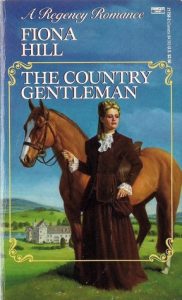 This is an odd sort of book, one where I hated the heroine for most of it, found the hero incomprehensible and thought many of the events implausible, yet I still enjoyed it thoroughly. Partly, that’s because of its age; it doesn’t conform to modern standards and so I found it surprising in a multitude of ways, and that’s far better than being predictable. There are some spoilers below, so don’t read on if you don’t want to know.
 The third part of this series of short cosy/Regency mysteries, which are best read in sequence. This episode worked even better than the previous two – not sure whether the author’s getting into her stride now, or whether the characters have just reached a more interesting stage of their relationship, but I have to say I enjoyed this a lot.