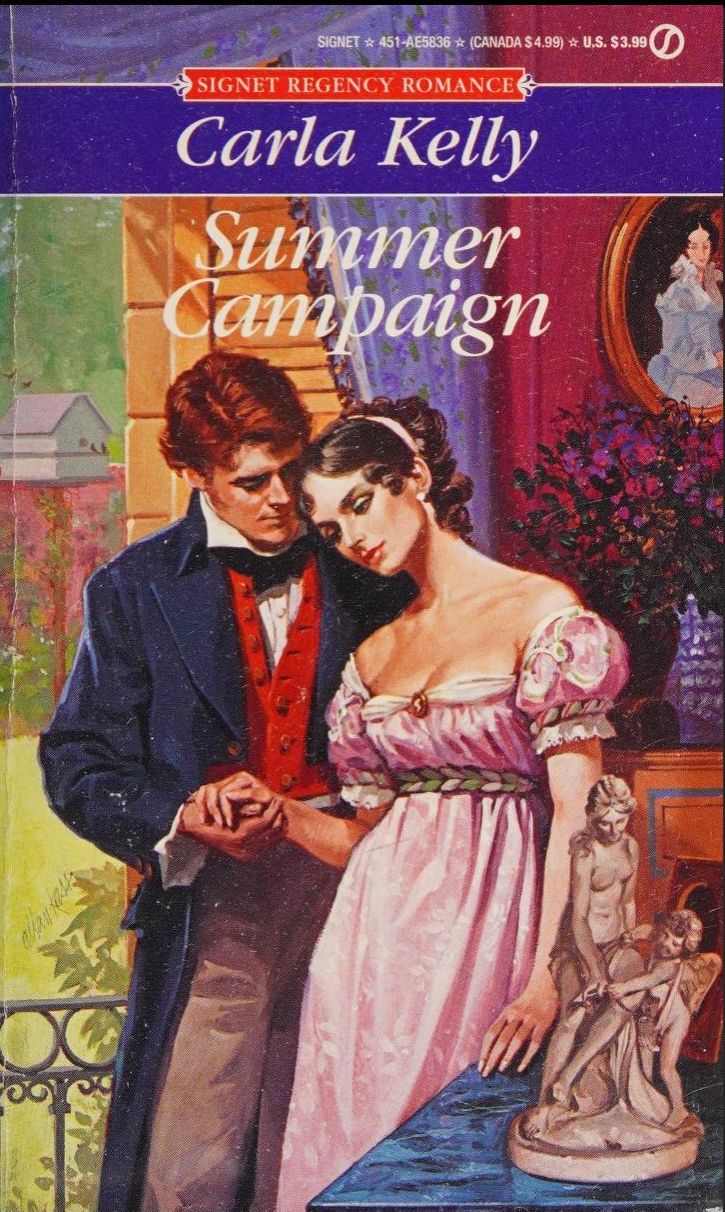
 A strange book, with some very unsettling mood changes, intermingling light-hearted banter with much more serious matters. Very enjoyable, despite that, although I wish the author had lightened the mood somewhat at the end.
Here’s the premise: Onyx Hamilton and her twin brother Gerald were abandoned at birth on the steps of a parsonage. The parson took them in and raised them, but when he died and his wife made a somewhat better (ie higher ranked) marriage, the foundlings became unwanted, especially as Mama now had a daughter of her own, Amethyst, who’s as spoilt and pampered as Onyx is neglected. Bit of a Cinderella vibe at this point.
In adulthood, Gerald joins the army and dies (the first of the downer moments that infest the book). Onyx is disposed of by the expectation that when a slimy parson proposes, she will accept him. Onyx has survived her miserable life by doing exactly as she’s told, so accept him she does. She’s dispatched to the parsonage which needs to be renovated before they can marry and move into it, and she’s expected to do all the work. In the meantime, she’ll have the reluctant support of the local big cheese, Lady Bagshott.
What I’ve written so far sounds fairly straightforward, doesn’t it? But very little of it was spelled out so clearly. A little more exposition would have been a great help in working out who was related to whom and to what degree. For instance, it wasn’t at all clear to me for a long time that the Lady Daggett who was so hard on Onyx was her adoptive mother, or that Amethyst was effectively her sister.
The journey to the parsonage is where things go off the rails, for the carriage suffers a breakdown, and when the coachman goes off to fetch help, Onyx and her maid are attacked by highwaymen. Of course they are, for how can there be a self-respecting Regency novel of this vintage that doesn’t have at least one highwayman, kidnapping or elopement? Or sometimes all three.
Happily, the ladies are rescued by the hero arriving in the nick of time, because of course he does. He and Onyx see off the robbers, but our hero, Major Jack Beresford, is wounded in the altercation. Of course he is (because this book is a positive trope-fest).
So it’s off to the nearest farm for some recuperation, and this is the weirdest journey imaginable, and the point where the story can’t make up its mind whether it wants to be a tragedy or a farce. Jack has been losing blood fast and he’s drifting in and out of consciousness, but whenever he happens to be awake, he’s bantering and downright flirting with Onyx, and not in a gritted-teeth, distracting himself from the pain sort of way, either. For two minutes, he’s as light-hearted as if he were in a ballroom, the next moment he’s swooned clean away again. It’s very peculiar, and frankly, downright unsettling.
This odd mood roller-coaster continues for several days at the farm, where one moment Onyx and Jack are making up false, but very funny, background stories (they’re a married couple with a three-year-old child, apparently) to satisfy the prudish farmer’s wife, the next Onyx is fishing bone fragments out of Jack’s wound.
But then Onyx’s slimy parson turns up, prepared to be outraged but is sweet-talked into allowing Onyx to take Jack off to Lady Bagshott for recuperation. From here on, the romance becomes a little bit more conventional. Jack gets serious and proposes, Onyx throws over her slimy parson and … wait a minute, no she doesn’t, she turns Jack down. Now, seriously, why would she… why would any rational woman turn him down? He’s cute, he’s fun, he loves her… oh yes, and his brother is a marquis (which he forgot to mention) so no shortage of money. It’s madness. There seem to be no real issues, except for the whole ‘I’m not worthy’ thing. Sigh.
The odd thing (OK, another odd thing) is that Jack doesn’t fight her decision at all. He simply accepts it, so although the title of the book is ‘Summer Campaign’, and you’d expect that to be Jack’s campaign to win Onyx, he really does very little in that line. I won’t say he’s entirely passive, but he never really fights for her (as a hero should, in my opinion).
The latter part of the book is another huge downer, and even the banter is lacking at this point. To be honest, I might have given up at this point, except that I really wanted to see how the two would get together in the end – whether Jack would become all manly or whether Onyx would realise what she was throwing away. And I also hoped for an upbeat ending for the huge downer, because frankly I couldn’t quite see the point of all the misery. Romances are supposed to be light-hearted froth, after all.
There are a few Americanisms scattered about – bay rum, for instance, and visit with and we don’t have grackles in England. Nor could you get a special licence from Leeds, or anywhere but Doctors’ Commons, London. And Jack, as the son of a marquis, should properly be addressed as Major Lord John Beresford, or Lord John, but he never was. None of this bothered me overmuch. I wavered between three and four stars, but in the end I enjoyed it pretty well, so four stars it is. But don’t read it if you’re already feeling a bit down.
 A charming tale that’s fairly predictable, but no worse for that. I’m not sure that the rather arm-wavy attitude to war wounds passes muster in this day and age (this book is close to fifty years old!) but I was grateful to be spared too many of the gory details.
 Possibly only a three star in some ways, but I was in the mood to overlook its flaws and just enjoy the romp. Nothing special, in a lot of ways, but a good comfort read.
 A terrific read, the first book for ages that’s had me so spellbound that everything else got neglected so that I could carry on reading. One of those tales with such an arresting premise that you just have to know how it all works out.
 Another good mystery for the Petterils to solve in this, the eighth book in this series. There are still problems for the couple, a predictable twist and one niggling issue for me that spoilt my enjoyment somewhat.
 I found this book hard to read because although it’s book 2 of the series, it parallels and interweaves with the plot of book 1 extensively. That book focused on Lord Kendall and Mrs Audeley, whereas this book is primarily about Gyles Audeley and Lady Louisa Lymington, but the first half is the same meeting of Lord Kendall’s family with the Audeleys and their trip to London, with many of the same scenes, just viewed from a different perspective. I found this quite unsettling to read, spending far too much time trying to work out which were the new bits. But then the second half of the book has problems of its own.
 Well. I’ve enjoyed some of Jennie Goutet’s previous works, but this one I found really lax in a number of ways. The idea was good, but the execution felt lazy, as if she hadn’t really thought too deeply about it, and was just pushing the plot along.
 A little bit of a let down, being a bit too similar to the previous book, and also a bit politically convoluted for my taste (I felt I ought to be taking notes, which knocks the shine off a bit), but a swoon-worthy hero, some lovely kisses and a fun read.
 An extraordinary book in three different ways. Firstly, it’s set in the middle of the famous Congress of Vienna in 1814, when most of the crowned heads of Europe gathered to celebrate the downfall of Napoleon, to squabble gently and outdo each other’s glittering social occasions. Secondly, it features one of the most fascinating heroes I’ve ever encountered. And thirdly, if, as seems likely, this is Mary Lancaster’s first published book in this genre, then it’s a veritable tour de force. I wish my own first steps had been half so accomplished.
 That was different! A what-if? scenario that lots of Jane Austen fans must have wondered about — what if Dear Jane had not been a spinster all her life before dying at the tragically young age of forty-one? What if she had in fact enjoyed the same happy ending that she so generously gave all her heroines? It sounds implausible, but astonishingly, it really works.