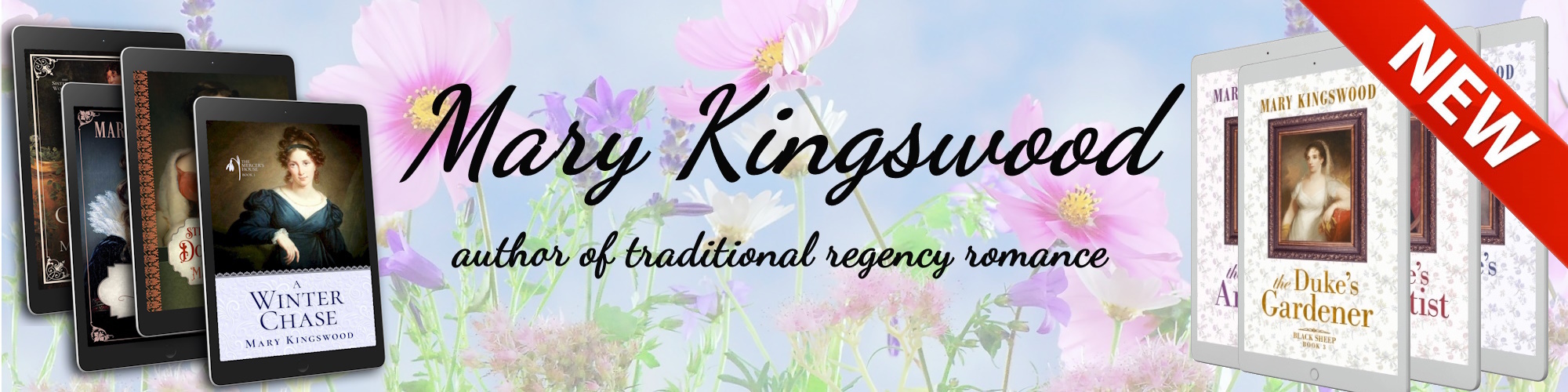
 It’s always a pleasure to discover a new-to-me author with a sure grasp of the Regency era, with language to match, and an engrossing, slowly-developing romance between two interesting characters. It’s even more fun if there’s a bucket-load of class differences to be worked out, with all the unexpected conflicts and confusions along the way.
Here’s the premise: Jane Bailey is comfortable in her position as a lady’s maid to a countess, when a stranger arrives to invite her to meet her long-lost grandfather. Jane’s father was estranged from the family when he married a servant, and when he died, Jane and her mother struggled to survive. Jane’s not sure she wants to disrupt her quiet life by meeting Mr Millthorpe but she agrees to a two week visit. That means five days travelling by carriage with the stranger, Mr Millthorpe’s great-nephew, Robert Kendal, who just happens to be handsome and so, so easy to like. As attraction develops into friendship and then to something more, they find themselves struggling to keep their feelings in check, and not always succeeding.
Mr Millthorpe turns out to be the typical irascible and domineering old gentleman so beloved of Georgette Heyer (think Mr Penicuik from Cotillion). Of the other residents, the second wife and some of the servants are hostile towards Jane, while Robert’s widowed mother is friendly. I liked this variety of responses, which is also found amongst the neighbouring families; it felt perfectly realistic and in line with their characters, rather than a convenient plot device. The gradual revealing of Jane’s history and her place in the family is beautifully managed. It could so easily have felt contrived, but the sequence of bombshells emerges in a very natural way, and all the characters react believably. This is a hard act to pull off, so kudos to the author.
Jane has the most difficult adjustment to make. From being a lady’s maid, constantly at the beck and call of her mistress, now she’s wearing silk, dining with the family and has her own maid to wait on her. And yet she expects that she will return to her employment at the end of the visit. Then there are her growing feelings for Robert to consider – she’s a servant, he’s the heir to everything, so there can be no question of marriage, can there? She thought she knew her place in the world, but now she just doesn’t know where she belongs, upstairs or down, family or servant.
Robert has an easier time of it, although I laughed when his answer to every setback was a fast gallop on his horse! A much better response than a temper tantrum! There were times when I just wanted him to sit down and talk to Jane, but he wasn’t an articulate man. Instead, he showed his love by protecting and supporting her when she needed it, and standing back to let her shine when she didn’t. He quickly learnt to respect her confidence in situations where she had some expertise, and I loved this exchange after she had taken charge following an accident:
‘Miss Bailey, you are an extremely managing female.’
‘Thank you, Mr Kendal.’
‘That was no compliment.’
‘Oh, I know.’
So many moments to savour… I loved the moment when Jane is treated to the services of a lady’s maid for the first time. I loved Robert going off to find a lost letter for Jane. I loved that the second wife eventually softens towards Jane. I loved the little details about the mourning customs. And my inner grammar pedant cheered wildly at this line: ‘He had used to tell her tales…’ Had used to… wonderful!
This is a lovely, straightforward Regency, with no side excursions into dramatic villainy, just two people tiptoeing their way through the minefield of family relationships towards a well-deserved and romantic happy-ever-after. There’s no graphic on-screen sex, but we’re left in no doubt that it happens off-screen and there are plenty of heated moments and passionate kisses along the way. The wedding-night scene is handled very tastefully. A great read, beautifully written, and highly recommended. Five stars.
 I got off on slightly the wrong foot with this, since I wasn’t at all sure to begin with which characters were the hero and heroine, but once I’d got that straight, it was all plain sailing. For anyone who’s perpetually looking for a Georgette Heyer replacement, this is very much in that style – amusing, frothy and with a grand finale where most of the characters are chasing each other around the countryside. It doesn’t quite have Heyer’s sparkling wit and sizzling side characters, but then what does?
 There are three or four different books in here, and any one of them, singly, would have worked better for me than the hotch-potch of all of them. There’s the romance between the brooding earl and the demure-but-passionate widow. There’s the mystery of the earl’s past, his sister and her son. There’s the restoration or destruction of the ancient garden surrounding the earl’s castle. There’s the interweaving of real historical personalities, like Samuel Coleridge and Humphrey Repton. And then there’s a murder mystery tossed in for good measure. Too many plots and sub-plots, too many characters, too many secrets and too much wayward characterisation make this an uneven and unsatisfactory tale.
 [Warning: contains some mid-book spoilers, so if you don’t want to know anything apart from the blurb, look away now].
 This book enchanted me from start to finish. I don’t normally read Jane Austen fan fiction (JAFF), but if it were all up to this standard, I’d never read anything else. The book is an imagining of Pride and Prejudice which veers off even before the Netherfield ball. Elizabeth indulges in one country walk too many, and has to be rescued by Mr Darcy. When rumours start to fly that compromise her reputation, Mr Bennet calls upon Mr Darcy to do the honourable thing – and he does. Now, there must be a million JAFF books that start off with Elizabeth forced into marriage with Darcy by one contrivance or another, but the author makes this feel completely believable.
 An odd book, and not my usual cup of tea, since it focuses very much on the seedier side of Regency life, which is not my favourite thing. Fortunately the emphasis is largely on the relationship between the hero and heroine, but the book felt somewhat old-fashioned, with the hero hell-bent on making the heroine his mistress, and the romantic conclusion a long, slow time coming.
 This is very much a book of two halves. The early chapters, as the hero and heroine inch towards an accommodation, are charming. The later chapters, as we’re inundated with relatives and drama, I found less successful but still enjoyable, and hooray for an older and wiser couple (he’s fifty and she’s thirty two).
 The third full-length novel from this new author, and it’s another corker. I don’t think I’ve ever read a Regency romance set in Wales before, but Davis skilfully creates the backdrop and the array of characters, both the aristocratic and the not-quite-gentry.
 A short and sweet free story from one of my new favourite authors. Phoebe is awaiting the return of the man she loves from his tour of the continent. Without a formal betrothal, she wasn’t able to write to him, but every day she wrote a line or two in a year-long letter. Now she awaits his arrival at a ball, with the letter heavy in her reticule. But before he appears, she overhears dreadful news – he’s enamoured of a woman he met he France. So when she finally meets him again, to save her pride she makes up an attachment to another man.
 This is an oddball one, completely wacky and wild, but very, very funny. Lilah Chadwick and Lord Drakesley (Drake) meet in inauspicious circumstances – at a country coaching inn, squabbling over the only available carriage for hire. Both are determined to have it and not prepared to yield, so when they discover that they are bound for the same place, they do the only sensible thing and share the carriage.