
This seems to be the debut Regency by this author, and it’s a striking piece of work, with an intensity that few books of this genre can match. There were some oddities, but on the whole it’s a brilliant piece of work.
Here’s the premise: Juliana Lockwood has agreed to marry her cousin, Oliver Fairchild. It’s not a love match on either side, merely a practical solution to her father’s growing debts, and Oliver has his own reasons for his reluctance, but the settlements are agreed, and the engagement is on. At this point, a neighbour, Sebastian Blackwood, returns to the district after five years away, and he and Juliana are immediately drawn to each other, both physically and intellectually.
This sets the scene for the fundamental premise of the book, whether Juliana follows her heart or does her duty by her family, and settles for the pragmatic marriage. This is a dilemma that must have arisen with great regularity in Regency times, and the safe marriage to the known quantity was a common solution to the problem of finding marriage partners for all the children when the family was buried in the countryside with only a limited number of families of equal rank to choose from. The wealthy and aristocratic went to London to find husbands, but country families had few options.
To be honest, I never quite understood why Juliana viewed the marriage in such a negative light. Oliver was a friend for whom she must have felt some affection, if only through the shared experiences of childhood. She knew his character and had nothing to fear from it. Oliver’s secret (which isn’t much of a secret, since it’s revealed very early) didn’t preclude having a happy, or at least contented, marriage, and for Juliana (and all Regency women) there were advantages in marriage that had nothing to do with the chosen husband. Independence, for one thing, and the ability to escape from the constant control of the family. But we see none of this – it’s all about how the marriage would stifle her (or ‘bury her alive’, as the blurb has it).
Sebastian Blackwood enters this situation with all the subtlety of a hand grenade. He starts by having a long, intense conversation with Juliana at their very first meeting, laden with subtext. He deduces her situation right away (and this is a constant refrain, that everybody understands everything; every meaningful look is interpreted in depth by observers, so there are absolutely no secrets). The intensity is another recurring theme, with every dialogue redolent with meaning. Anyone looking for the traditional Regency restraint had better move swiftly on, because there’s none on display here.
While we’re on the subject of Regency expectations, there are a number of minor irritations. Some are the usual thing: dance cards, the modern waltz, passed instead of died, service a la russe, the big wedding (invitations, lace veils, table decorations and all), a dedicated ballroom in a private house (vanishingly rare; a medieval house would use either the great hall or the long gallery, and a modern building would have several smaller rooms that opened into one larger room).
There were some strange breaches of etiquette, like general conversation around the table at a formal dinner, and the new neighbour who calls on the neighbours instead of waiting for them to call on him. Surely everyone who’s read Pride & Prejudice knows that the protocol was for Mr Bennet to call on Mr Bingley, not the other way round? Then there was the howler of shooting pheasant in July, a huge no-no (autumn and winter only).
One aspect that I found really unsettling (although I’m sure it wouldn’t bother most people) is characters being called by their Christian names. Not in dialogue, which was always strictly formal and very correct, but in the narrative. Juliana’s father was called Augustus several times, and her Aunt Charlotte was regularly called just Charlotte. I’m used to the point of view setting the names, so when we’re in Juliana’s point of view, I’d expect it to be Mr Lockwood said… or Aunt Charlotte said… As it was, it was very odd.
One other unsettling aspect was not knowing quite where the story was set. Juliana’s house is described as being very close to open moorland, but there isn’t that much proper moorland in England and most of it is in the northern counties (but we’re told it’s not in the north). I can only assume it’s down in Devon or Cornwall, but there’s no other indication, apart from the moors. Does it matter? No, not at all, but it does feel odd, much the same, I imagine, as an American reader not knowing whether a book is set in Louisiana or Idaho. Even if it’s not plot-related, one likes to know where one is. Every Jane Austin book is set in a specific county.
But these points are relatively trivial, because the strengths of the book far overshadow my minor grumbles. The author’s glorious powers of description, for instance. She has an amazing ability to evoke a setting in wonderfully atmospheric terms, and the weather plays a big role, too, with storms and rain abounding. I suspect the author is a fan of the Kiera Knightly P&P, since the hero spends a number of important scenes dripping wet.
Then there’s the intensity that I mentioned earlier. This gives the whole story a power that most Regencies entirely lack. Let’s face it, the conflict between marrying for duty or love is as old as the genre itself, but here it’s given an unusual resonance. There are some moments (OK, a lot of moments) where the intensity spills over into un-Regency-like openness, and on a number of occasions things are said openly that I would have expected to be expressed privately or at least more subtly. But every author creates her own version of the Regency, and this one has a lot less restraint than the norm.
There’s only one point where the lack of restraint is just too implausible and that’s the climactic dinner party, where things were said and done in the presence of all the neighbourhood worthies and the servants! No, just no. And no, marriage settlements were not signed at the dinner table, or by the bride – that was men’s work, and in private. But I confess, it makes for a very dramatic moment, which is presumably just as the author intended, so I won’t knock off a point for it.
A very unusual and powerfully compelling read, that I just couldn’t put down. I’ll be watching out for more of this author’s work. Five stars.
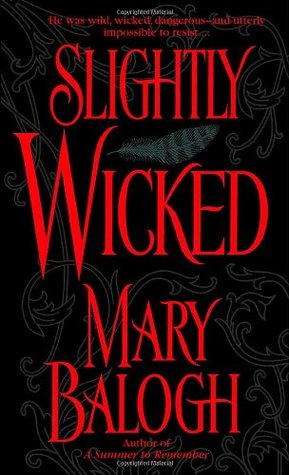 Book 2 of the Bedwyns series, and after the slow start to book 1, this one starts in spectacular fashion and never quite lets go. It’s a bit of a trope-fest, but very readable, for all that.
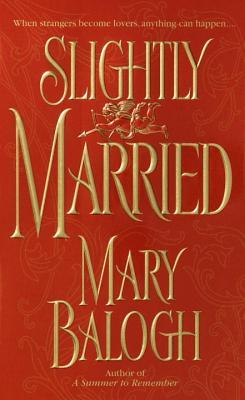 Many moons ago, I came across a list of all Mary Balogh’s books, ranked in order from best to worst, from 1 down to number 48. It only went up to the mid-2010s, so not definitive, but it was a strong indication of which of her early works were worth reading and which might safely be passed over. Some of them I managed to track down and read, but far too many just weren’t available on Kindle in the UK, including the two top-rated books. And now they are. At long last, the Bedwyns series (Slightly…) is out on the Kindle. I’ve scooped up the whole series, and also the similarly unavailable Simply… series, and am prepared to settle in for some serious catchup reading, starting here with book 1 (although there are two prequels, which I have in fact read).
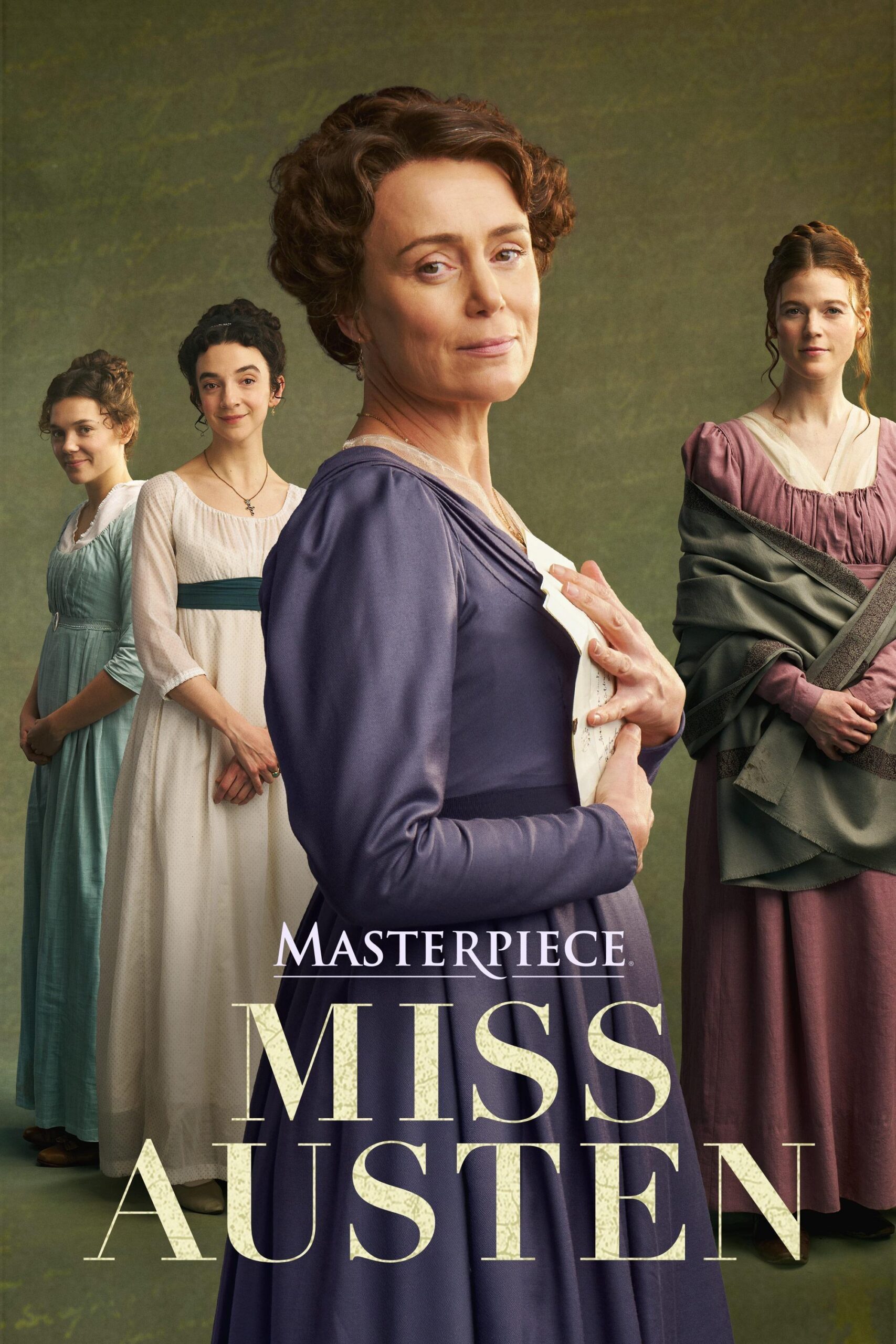 The fascination with all things Jane Austen never seems to diminish, and here is the BBC’s latest offering, a four-part mini-series focused on Jane’s sister, Cassandra. It’s set in 1830, but with many flashbacks to events earlier in Cassy’s life, which inevitably involve Jane. Neither sister ever married, but both were engaged, Cassy to Tom Fowle, who died on a trip overseas, and Jane, very briefly, to Harris Bigg-Wither. The series also invents a suitor for Cassy on a seaside holiday to Sidmouth, possibly because so little else happens in the sisters’ lives.
 I love Judith Hale Everett’s work, which always has little quirks which make it different, and therefore out of the usual predictable way of Regencies. This one tackles one of the greatest challenges for any historical author, the case of the rake who falls in love. Can he reform? And just how believable is his redemption? So many authors think it’s enough to point him at a good woman and have him fall in love – bingo! Redemption ahoy. Everett doesn’t make that mistake, nor does she gloss over her hero’s defects so that he’s really not that bad. Francis really is a selfish so-and-so, and his transformation is painfully slow and, frankly, just painful. Yet it’s all utterly believable. Bravo.
 Oh, how I loved this book! A collection of short stories by some of the best writers in the genre, it’s absolutely oozing with charm. My only complaint, if you could call it that, is that the stories are just too short! I’ve added my comments into the blurb, marked with *****.
 I’m not usually a fan of the whole damaged-by-war scenario that afflicts so many Regency heroes these days, but this is a great example of the type, very well-written and with a gentle, slow-burn romance – the very best kind.
 This is book 9 in the series, and although the initial freshness has worn off and the disparity between April’s background and Piers’ rank is of less importance now, the author still manages to come up with an entertaining and intriguing mystery.
 Christina Dudley is such a clever author! This seemingly simple plot (let’s put on a play!) produced a tale of delicious complexity, and every part of it perfectly sensible.
 Not my usual fare, this is a mid-Victorian romance with a complicated false identity that actually worked surprisingly well. No great depth to it, but an enjoyable read.