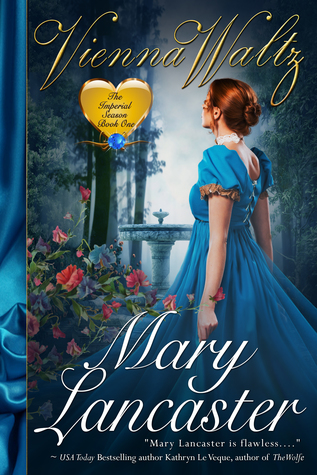
 An extraordinary book in three different ways. Firstly, it’s set in the middle of the famous Congress of Vienna in 1814, when most of the crowned heads of Europe gathered to celebrate the downfall of Napoleon, to squabble gently and outdo each other’s glittering social occasions. Secondly, it features one of the most fascinating heroes I’ve ever encountered. And thirdly, if, as seems likely, this is Mary Lancaster’s first published book in this genre, then it’s a veritable tour de force. I wish my own first steps had been half so accomplished.
Here’s the premise: Lizzie Gaunt is the eldest of several siblings, orphaned and abruptly turfed out of the family home by the new heir, a distant cousin. In desperation, they throw themselves on the mercy of their aunt, whose husband is part of the British diplomatic effort in Vienna. Lizzie herself is past the age of looking for a husband, but her beautiful younger sister should make a good match, if only they had a little money to launch her into society. There’s just one hope – the last remnant of the family wealth, an expensive necklace, is being used by her aunt to bolster the family’s position in Vienna. Eventually, it will have to be given back to the new heir – but not if Lizzie can get her hands on it first. And when she sees a man daring to steal a necklace at the theatre, she knows she’s found the thief who will help her.
So far, so preposterous, but never mind. There’s no law that says a Regency romance has to be plausible, which is just as well, because most of them would be illegal if there were. So the mysterious thief sets about finding out more about his task and finding himself inexorably drawn to the lively Gaunt family (shades of Frederica here). And for their part, they soon see ‘Johnnie’, as he calls himself, as a comfortable friend.
But Johnnie is also Vanya, a Russian aristocrat with a murky history, involving women, booze, duels, the Tsar and (possibly) spying. It’s a testament to the skill of the author that she successfully conveys just what a dangerous man Vanya is in a multitude of ways. He seems to be coiled like a spring, ready to unleash his power at any moment. And yet, he’s as sweet as pie to the Gaunt family, acting like an affectionate older brother, and he’s soon feeling true affection for Lizzie, which she, in her self-effacing way, is completely unaware of, thinking herself to be no sort of draw to a man.
I won’t go into the details of the plot which get delightfully complicated. All I can tell you is that I thoroughly enjoyed the whole thing. I liked the whole political shenanigans going on in the background, and the inclusion, sometimes in starring roles, of real historical figures. And the romance comes slowly to the boil, the very best kind (in my view). An excellent story, beautifully written and highly recommended. Five stars.
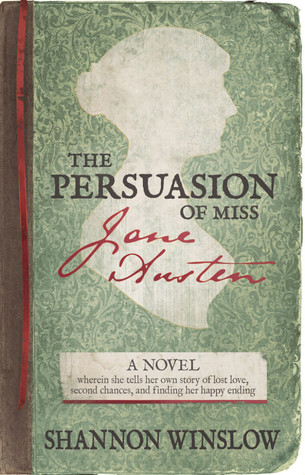 That was different! A what-if? scenario that lots of Jane Austen fans must have wondered about — what if Dear Jane had not been a spinster all her life before dying at the tragically young age of forty-one? What if she had in fact enjoyed the same happy ending that she so generously gave all her heroines? It sounds implausible, but astonishingly, it really works.
 An odd little book, a bit lacking in the romance department and with far too many not particularly interesting characters milling about at the side of the stage, but very readable.
 An odd little book, which I found hard to believe was published only this year. It has the feel of something much more traditional, but is very much one of a kind. To be honest, I’m not at all sure what to make of it.
 The one word which summarises this book is charm. It’s a delightful, gentle read, which the author describes as an homage to Georgette Heyer and it really does work pretty well, so for anyone yearning to find a new Heyer, while there’ll never be anyone quite like her, this book is a very acceptable substitute.
 The third in the Pevensey series, and another corker. The author is exceptionally skilled at drawing characters with deep family secrets, and at classic murder mysteries; this book (indeed, the whole series) is a stunning combination of both.
 After the surprise of the first book, this one came somewhat less out of left field, but it was just as enjoyable. The whole series is inspired by real events in English history, but don’t let that put you off, since the writing is firmly rooted in the Regency.
 One of the joys of reading a book for the first time is not knowing precisely what lurks within its pages. Sometimes, in fact most times, if I am being honest, the plot unrolls smoothly and predictably, and that’s fine, too, but sometimes – oh, a glorious few times! – it veers off into unexpected territory. And so it is here.
 A lovely and quite unusual story of a young widow fighting to keep her independence. Modern Regencies that feature a spirited and feisty heroine who doesn’t need a man to run her life, thank you very much, are two a penny, but this one is definitely out of the usual mould.
 This is a difficult one for me to rate. On the one hand, there’s nothing major wrong with it, really. It just never set me alight… no, worse than that, it never even became interesting. Dull characters, predictable plot, and writing that, while competent, never sparkled.