 I’m a fan of Carola Dunn’s Regencies, and although they don’t all work for me, that’s true of any author, and the writing is always superb, even if I do occasionally want to throttle the hero. But no such difficulties here. Mr Philip Trevelyan is the perfect hero, a man who makes things happen and can always be depended on, and he has almost superhuman powers of restraint, a characteristic which all Regency gentlemen should display but often don’t.
Here’s the premise: Miss Alison Larkin is living a hand-to-mouth existence in an unfashionable part of London, with a collection of gently eccentric aunts, three small dogs and one great big one (a Newfoundland, who turns out to have a starring role in the story). Another, even more eccentric, aunt returns, newly widowed, from India with her late husband’s fortune in her reticule. She’s determined to spend some of that money on Alison to give her a proper season, and a dowry to boot. None of the aunts is suited to sponsoring her in society, however, so the Nabob aunt engages Lady Emma Grant, the widow of a baron, to launch her.
At this point the story is the very conventional one of the unsophisticated debutante going through the usual rituals of buying new clothes, learning to dance, attending her first ball, hoping for vouchers from Almack’s and so forth. It’s very resonant of Georgette Heyer’s Arabella, with the beautiful young lady finding herself much sought after, and her suitors unaware of her humble background. The big difference is that Arabella is thought to be an heiress, whereas Alison actually is an heiress. The other principal difference is that Alison has set her heart on marrying a lord. I can’t remember whether any sensible reason was given for this or whether it was merely a whim, but although she understands that it’s unlikely, she is definitely leaning in that direction. Which is why she doesn’t even consider the very attractive Mr Philip Trevelyan, the first eligible man to cross her path in this new life of hers. It doesn’t help, of course, that he displays not the least interest in her, in fact, he seems rather to sneer at this upstart cit his good friend Emma has taken on. It also doesn’t help that the reader’s first sight of him is proposing to Emma (who fortunately turns him down).
As is the way of books of this era, Alison is pretty enough and lively enough and rich enough to spark a ton of interest from society gentlemen, and several of them are lords, too. There’s attractive but impoverished Lord Kilmore, for a start. Then there’s Alison’s charming cousin, Lord Deverill. And there’s steady but dull Lord Fane. And while Alison is focused on her bevy of lords, she’s slowly coming to depend on Philip, and he’s slowly coming to appreciate all her good points. So far, so predictable, and although her lords deplore the eccentric aunts and unfashionable home address, somehow it doesn’t stop Alison becoming a runaway success and getting those oh-so-important vouchers for Almack’s.
Now, none of this is enough to set the book much above the readable but unremarkable run of the mill for Regencies of the era. But towards the end, it manages to rise above the average in a most unusual way. This is somewhat spoilerish, so skip to the last paragraph if you don’t want to know any more.
When the other lords fall by the wayside, for one reason or another, and Lord Fane is the last one left standing, Philip does something quite remarkable. He’s well aware by this time that he wants to marry Alison, but he thinks she sees him merely as an avuncular white knight who rides to her rescue when needed. He thinks, too, that she truly wants to marry a lord. And why shouldn’t she have her wish? So he sets up a house party at his estate, invites Lord Fane and Alison, and leaves them to sort things out between them. As someone says to him, he’s taking a terrible risk, and if this story were to be written nowadays, undoubtedly the hero would muscle his way between heroine and lordly suitor, and do everything in his power to prevent the match. Or he might declare himself, and thus give her the choice. But no, with the true restraint of a Regency gentleman, he stands aside.
I have to say, though, that while I am totally in awe of such authentic principles, it puts the heroine in a terrible dilemma. It’s the great conundrum of life for a Regency heroine — does she accept the offer that’s on the table, even if it’s not perfect, or does she hold out for a better (or at least more palatable) offer, which may never happen? If she misjudges, she may end up married to the wrong man, or else left on the shelf altogether. This is why I’m always in favour of giving the heroine the full choice of options, and here her sponsor in society, Lady Emma, should have been alert to the possibility. She should have been whispering in her ear that Lord Fane was not the only man with a serious interest in her. How can Alison make a rational choice without all the information?
But of course, everything comes right in the end, although not without a little gratuitous melodrama to liven things up, and give the hero the opportunity to show off his heroic tendencies. A lovely read, beautifully written and totally authentic. Highly recommended. Five stars.
 I absolutely loved the first book of this series, so reading this follow-on was a no-brainer. Curiously, though, although it started out in grand style, I soon found my interest waning. Twice I set it aside to read something else, or several something elses, and grew increasingly reluctant to pick it up again. I’m not quite sure why, because all the elements I loved in the first one are here again, but somehow it just didn’t work as well for me.
 This is a strange book. I’ve read other books by this author, and they were all light, fluffy affairs. This is a much more serious read, longer, wordier and darker generally. It also has an odd structure, where the first third of the book is essentially prologue, a long, rambling exposition of the backstory to the main part of the novel. It would be very easy to read the blurb and start reading and then wonder if you had the wrong book altogether. I know, because that’s exactly what I did.
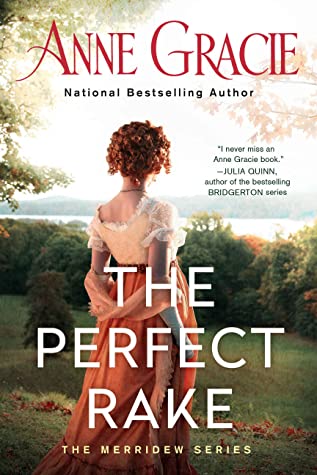 This is one of those books that could have been a five star read, but it had weaknesses that I just couldn’t get past – too much random violence, too many clichés, too much contrariness in the heroine, too much plot manipulation on the author’s part and too detached from real life in general. But oh, the hero! A confirmed rake who falls instantly for the heroine and doesn’t swerve from that for one single second – oh, yes, yes, yes! It was Gideon alone who saved this book from three-star ignominy, and near as dammit yanked it all the way up to five stars, too. Lovely, lovely Gideon.
 Jayne Davis is one of the most reliable of the new school of historical romance authors, not because she writes the familiar themes repeatedly but precisely the opposite. She’s not afraid to step off the well-trodden paths and set her characters firmly down in unusual territory – the pre-Regency Georgian era, for one thing, far-flung parts of the British Isles for another, and the hard-working middle and lower classes. As a consequence, her books are always fascinating, and this is just the latest example.
 Jenny Hambly is one of my must-read authors, and this book was another excellent addition to her repertoire, to round off the Confirmed Bachelors series. The distinguishing characteristic of this one is the setting – most of the book is well beyond the usual run of Regency backdrops, being set on the shores of Lake Garda, and I can’t tell you how refreshing it was to be somewhere so unusual. If you’ve been to Italy it will bring back memories, and if you haven’t, you’ll be able to imagine it.
 This is another author who published Regencies back in the day, now being republished in ebook form with new covers. I’ve not encountered this author before, but I absolutely adored this book. It has a charming rural setting, a mysterious (but not too threatening) hero, a downtrodden and thoroughly deserving heroine, and a romance that builds slowly over the course of the book. And no pesky anachronisms (that I spotted).
 Every Christina Dudley book is a joy to read, and this is no exception. I’ve been looking forward to Minta’s story since she first appeared in the background of her eldest sister’s story, shooting arrows with her bosom friend Aggie, and generally getting up to all sorts of hoydenish mayhem. How was she ever going to turn into a heroine? I couldn’t wait to find out.
 My second Joan Smith on the trot and I’m finding that my palate soon becomes jaded. They are very samey, and for those looking solely for the froth of a light-hearted Heyer-esque romp, this is just the ticket, but after a while I begin to long for a bit of character development. In this one, the misunderstandings all became a bit too tangled and I just wanted it all to stop.
 This was a barrel of laughs, and although the hero and heroine get themselves into a rare old muddle through sheer stupidity, and some of the characters are a bit over the top, it’s all so funny that it doesn’t really matter.