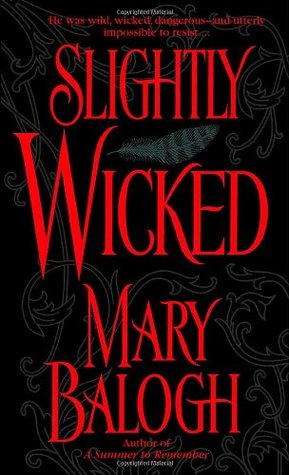
Review: Slightly Wicked by Mary Balogh (2003)

Posted July 7, 2026 by Mary Kingswood in Review / 0 Comments

Book 2 of the Bedwyns series, and after the slow start to book 1, this one starts in spectacular fashion and never quite lets go. It’s a bit of a trope-fest, but very readable, for all that.

Here’s the premise: Judith Law is travelling on a dismal journey, leaving behind her family to become the poor relation after her charming but feckless brother brings debt on the household. A public stagecoach is a miserable affair for a gently brought up woman, and her daydreams of a handsome highwayman scooping her up and riding away with her are poor comfort. But when the coach overturns and a lone horseman offers to rescue her, the temptation is too great. And when her rescuer offers her a brief liaison while they are trapped at a provincial posting house, she seizes the opportunity. At least she will have a little happiness to look back on in her dreary future. And her two nights of passion are all she had hoped they would be.

Unfortunately for Judith, Lord Rannulf Bedwyn isn’t the ship that passes in the night. He’s staying at the neighbouring estate to her relations, and is the principal suitor for the hand of their daughter, Judith’s cousin. There’s no avoiding him, and although he now realises she isn’t the actress and courtesan he originally thought, and offers for her from guilt, she refuses and leaves him free to pursue her cousin.

I’ve said that the book is a positive trope-fest, and it’s absolutely true. Quite apart from the penniless poor relation trope, there’s the silly ingenue trope (we can blame Georgette Heyer for that one), the overbearing aunt who treats Judith as a servant, the lecherous bloke who tries to rape Judith, the compromise-the-hero-into-marrying plot device, the heroine who doesn’t realise how beautiful she is trope, the heroine who runs away constantly, and finally, the revenge plot (which I won’t spell out, to avoid spoiling the surprise, but none of it will surprise experienced readers of Regencies).

Nevertheless, Judith is a sympathetic heroine – I confess, I’m a sucker for the Cinderella-type story, where the heroine does eventually go to the ball. And Rannulf makes for a wonderful hero, even if it takes him far too long to realise that he wants to marry Judith and not the silly ingenue.

This being a Mary Balogh story, there is, naturally, a whole heap of sex of the relatively graphic variety, but since those two nights of passion are the whole foundation of the story, it’s hard to quibble about it. The other characters are relatively minor, or else unpleasant, so they don’t merit much discussion. I confess I got muddled sometimes by the two grandmothers, and wasn’t always sure which one was being talked of. Another compelling read, but the weight of familiar tropes keeps it to four stars.

Tags:


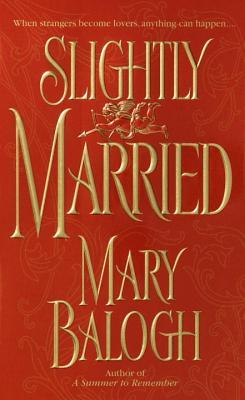
Review: Slightly Married by Mary Balogh (2003)

Posted July 7, 2026 by Mary Kingswood in Review / 0 Comments

Many moons ago, I came across a list of all Mary Balogh’s books, ranked in order from best to worst, from 1 down to number 48. It only went up to the mid-2010s, so not definitive, but it was a strong indication of which of her early works were worth reading and which might safely be passed over. Some of them I managed to track down and read, but far too many just weren’t available on Kindle in the UK, including the two top-rated books. And now they are. At long last, the Bedwyns series (Slightly…) is out on the Kindle. I’ve scooped up the whole series, and also the similarly unavailable Simply… series, and am prepared to settle in for some serious catchup reading, starting here with book 1 (although there are two prequels, which I have in fact read).

Here’s the premise: Colonel Lord Aidan Bedwyn’s life was saved by a junior officer, Percy Morris, so when Percy dies in battle, he asks Aidan to take care of his sister, ‘no matter what’. Aidan visits Eve Morris at her home to convey the news of Percy’s death, and to ask what service he may render her, to fulfil Percy’s dying wish. She refuses his aid, but he then finds out that she’s about to be turned out of her home, along with all the waifs and strays she acquired over the years (because she’s a pretty modern do-gooding woman beneath her Regency bonnet). In one of those quirky wills so beloved of Regency authors, her father left her the estate and fortune for one year only. If she marries within the year, it stays hers, otherwise it goes to her brother, Percy, or failing that, to an unpleasant cousin. There are just four days before cousin Cecil inherits, but Aidan knows where his duty lies; within hours, he’s whisked Eve off to London for a special licence and a hasty wedding. After that, they’ll separate for good. A true marriage of convenience.

I did wonder why they bothered to go up to London for a special licence when they could have had a bishop’s licence from the nearest cathedral city, since they married in church anyway, but still, it gave them an opportunity for some sightseeing (aka bonding) before returning to her home. He stays for a few days to see off the unpleasant cousin and enjoy a dance at a celebration ball (the mourning for her brother is glossed over a bit too easily, frankly; she really shouldn’t be dancing but never mind).

Aidan finally takes off for his own home, planning never to mention his marriage to a soul, since his brother the Duke of Bewcastle would hardly approve. Too bad, then, that while in London he’d bumped into a military acquaintance and introduced Eve as his wife. So the secret is soon out, and lo and behold, Lord and Lady Aidan are invited to a celebration dinner at Carlton House with the Prince of Wales. Wulf (the duke) is determined that Lady Aidan will be there and won’t disgrace the Bedwyn name, and what Wulf wants, he usually gets.

I confess that the early chapters, setting up the marriage that everyone knows is coming (it’s right there in the blurb), were a bit slow. I appreciated that we weren’t dumped with the whole Bedwyn family all at once, which would have been a bit much, but on the other hand, the whole book perks up a great deal once Wulf and co get involved. And once Eve is persuaded up to London to be transformed into a society lady, the tension between the Eve and Aidan, and between Wulf and everyone, ramps up to eleven.

Just to complicate things, there are previous loves to be taken into account, one serious (for Eve) and one more nebulous (for Aidan), and the unpleasant cousin hasn’t entirely given up his meddling. So lots to be unravelled before our hero and heroine settle down to their saccharine-sweet life of domestic bliss.

Like all Mary Balogh’s books, there is sex in fairly graphic detail, although tastefully done, and it’s not excessive. I didn’t notice any horrible anachronisms or excessive Americanisms, although the spelling of ‘honor’ jumped out at me every time, and there was one mention of ‘passing’ instead of death. It is a wonderful read (it’s Mary Balogh, for heaven’s sake, so of course it is) and it gets the emotional depth pitch perfect. I wouldn’t actually have rated this the second-best book she’s ever written, as my ranked list shows, and that slow start keeps it to a very good four stars.

Tags:


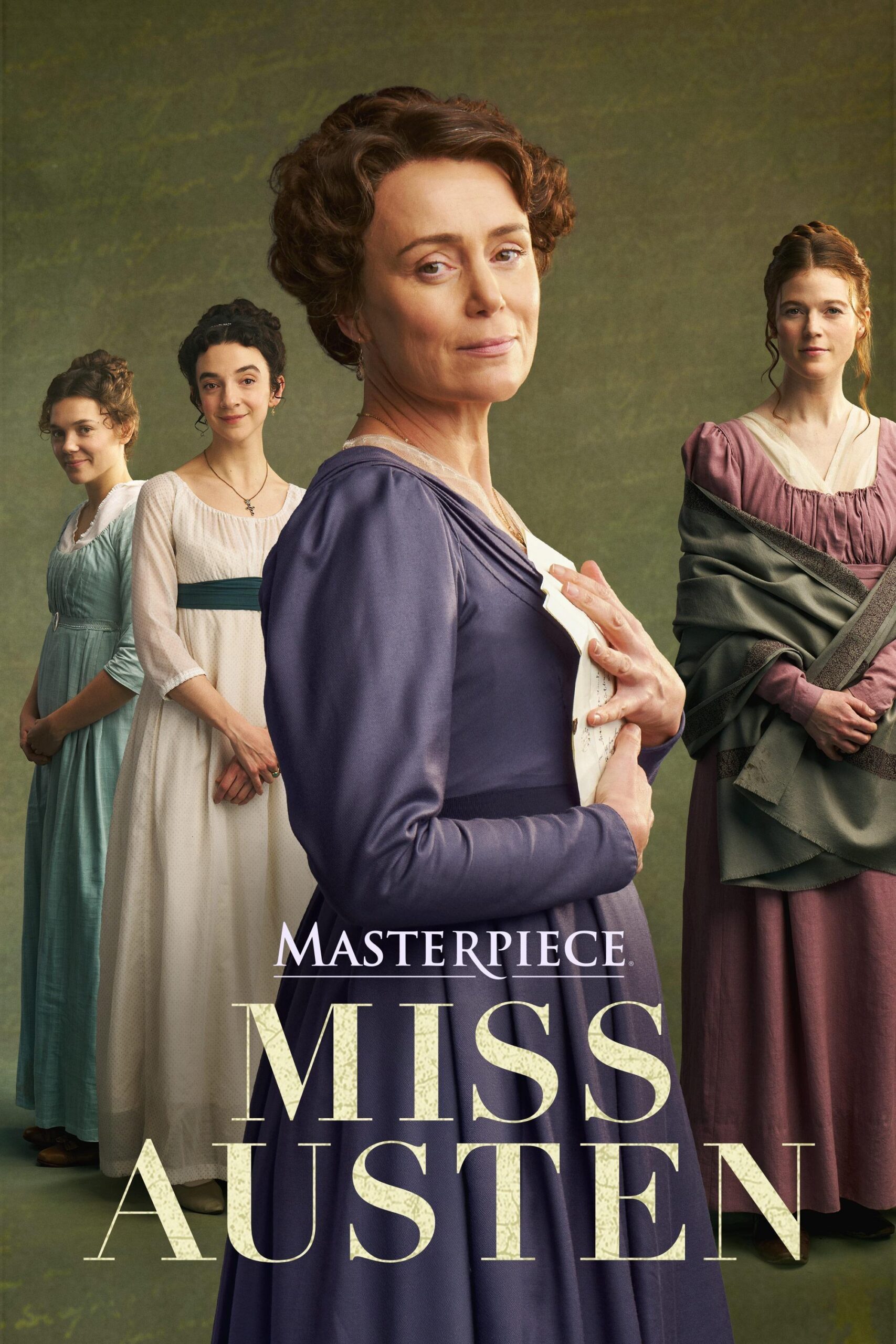
Review: Miss Austen (TV mini-series, 2025)

Posted June 17, 2026 by Mary Kingswood in Review / 0 Comments

The fascination with all things Jane Austen never seems to diminish, and here is the BBC’s latest offering, a four-part mini-series focused on Jane’s sister, Cassandra. It’s set in 1830, but with many flashbacks to events earlier in Cassy’s life, which inevitably involve Jane. Neither sister ever married, but both were engaged, Cassy to Tom Fowle, who died on a trip overseas, and Jane, very briefly, to Harris Bigg-Wither. The series also invents a suitor for Cassy on a seaside holiday to Sidmouth, possibly because so little else happens in the sisters’ lives.

The 1830s part of the story is centred on some letters Jane wrote to Eliza Fowle. Eliza has been dead for some years, but now her husband is dying and Cassy wants to retrieve the letters, to keep them out of the hands of those who would publish them and expose Jane’s (and Cassy’s) private lives. It’s a flimsy excuse for the story, so we get endless shots of Keeley Hawes, as Cassy, poring over letters, crying or outraged or simply remembering events far in the past (cue flashbacks).

There’s some business with Eliza’s surviving daughter Isabella, and finding a home for her now that her clergyman father is dead and she’ll need to leave the parsonage, and there’s a suitor for Isabella to complicate the issue. Cassy takes charge (she’s portrayed as something of a bossy boots), but in the end her efforts are foiled and Isabella marries her doctor admirer.

I’m not a great expert of the costumes of the 1830s, but it struck me that the very plain fabrics chosen for all the women would be far less practical than the printed patterns which were becoming very common then with greater industrialisation. I wasn’t to impressed with the Regency-era costumes, either; Jane appears to own only one gown, in bright turquoise, and Cassy’s yellow gown was eye-wateringly bright.

However, that’s a minor grumble. The series is worth watching, if you don’t mind the fact that virtually nothing happens. The acting is, as you’d expect from the Beeb, superb. A pleasant way to pass a few hours, although I’m not sure that it does justice to Jane’s personality. I far preferred the fun-loving Jane in Miss Austen Regrets.

Tags:


Review: Fair Play by Judith Hale Everett (2025)

Posted June 17, 2026 by Mary Kingswood in Review / 0 Comments

I love Judith Hale Everett’s work, which always has little quirks which make it different, and therefore out of the usual predictable way of Regencies. This one tackles one of the greatest challenges for any historical author, the case of the rake who falls in love. Can he reform? And just how believable is his redemption? So many authors think it’s enough to point him at a good woman and have him fall in love – bingo! Redemption ahoy. Everett doesn’t make that mistake, nor does she gloss over her hero’s defects so that he’s really not that bad. Francis really is a selfish so-and-so, and his transformation is painfully slow and, frankly, just painful. Yet it’s all utterly believable. Bravo.

Here’s the premise: Eliza Willoughby is the daughter of a wealthy English plantation owner and one of his freed slaves. She’s grown up in Jamaica, a much loved child, but when her father dies and settles all his wealth on her, telling her to go to England to find a husband, she discovers she has a half-brother there from her father’s first marriage. Nathan has the country estate to support him, but he’s a wastrel and ne’er-do-well who has neglected his land in favour of enjoying himself, in anticipation of inheriting the plantation wealth eventually. He’s shocked to find out that his unknown half-sister has all the money that should have been his, and it’s tied up so tight that he can’t even sponge off her to maintain his lifestyle.

Into this tense situation comes Francis Mantell, one of a group of wild friends of Nathan’s, who see Eliza as a bit of entertainment to liven their country sojourn. She is more than capable of dealing with them… most of the time. But when Nathan makes a deal with one of his friends (half Eliza’s fortune when the friend marries her, and Nathan doesn’t mind how he manages it), Francis finds himself in the unaccustomed position of wanting to defend Eliza from the predator. And with the awakening of his conscience he finds something else stirring in his mind. Is it possible that the hardened rake is actually falling in love?

This is definitely a slow-burn romance, so slow that even close to the end, Francis is still agonising over whether he’s truly in love or not. We see less of Eliza’s thoughts, but hers are more clear-cut. She’s far more self-aware than Francis and knows her own mind relatively swiftly.

One of the triumphs of the book is the way Nathan and his friends are portrayed as genuine creeps. Eliza realises they’re creeps, but she doesn’t want to be driven from her home by them, and for quite a long time she wants to get to know her brother better in the hope of turning him, however reluctantly, into the caring family she craves. But this does create a very real tension in all her interactions with his friends. Are they just harmless flirts, or will they pressure her into a less than ideal marriage? Or, worse, will they force her? She doesn’t know and neither does the reader, and the question of who to trust is tricky.

There are some implausibilities in the plot (some convenient illnesses), but eventually things come to a head and Eliza has to act quickly. And this leads to my only real grumble with the book. I’m a great believer in a resounding reunion of the lovers, but when one of them heads off to the other side of the country for months on end to (supposedly) make himself a better man, without telling his beloved what he’s doing, I do get a bit cross. Go and improve yourself if you must, but at least tell the poor girl what you’re up to so she doesn’t think you’ve abandoned her and marry someone else in a fit of pique.

But that’s my only complaint. This is (as usual) a beautifully written book, a little out of the common way, with an interesting and spirited heroine, a hero who eventually becomes worthy of her and some interesting discussion on Jamaican frogs, for those who have an interest in such things. This is a very successful reformed rake story, and only that separation at the end keeps it to four stars for me. Highly recommended.

Tags:


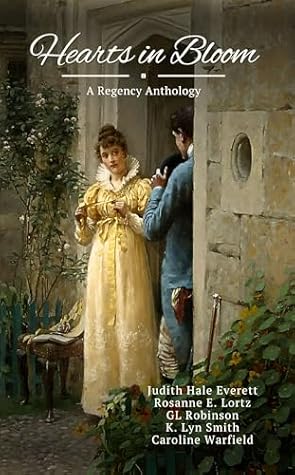
Hearts in Bloom (Anthology) (2026)

Posted June 17, 2026 by Mary Kingswood in Review / 0 Comments

Oh, how I loved this book! A collection of short stories by some of the best writers in the genre, it’s absolutely oozing with charm. My only complaint, if you could call it that, is that the stories are just too short! I’ve added my comments into the blurb, marked with *****.

A spring anthology brimming with all the hope, heartache, and thrill of first love. Mysterious admirers, magical talismans, spirited matchmakers, and a bit of creative persistence overcome the obstacles to true love, no matter how daunting!

Susannah Tells the Truth, by GL Robinson

A grumpy invalid meets his match in an outspoken red-head, whose opinions about self-pity prompt him to set about improving his situation, and might just convince him to try his chances at winning her heart.

***** He’s a recluse, injured both physically and psychologically, and she’s the bracing breath of fresh air (all right, a howling gale) needed to jolt him back into the world. This one really was too short, for his healing process seemed miraculously fast. But’s it’s a lovely story, all the same.

Engaging Miss Enderby, by K. Lyn Smith

When a governess receives an anonymous valentine from the Newford Cupid, she is surprised to find it is far more earnest than his usual fare. It seems she has an admirer, but is he truly sincere, and dare she try to discover his identity?

***** He’s the post master and village shopkeeper, she’s a governess, so we’re definitely into the ranks of the hardworking classes, not the idle gentry. It’s a lovely look at the hesitant way a courtship might have progressed between two such characters.

To Bloom Unseen, by Judith Hale Everett

Having failed once more to attain a bride suitable to his exacting mother’s tastes, a viscount determines it is time to put his happiness before duty and once more pursue the less-than-perfect lady he has loved all his life.

***** This is such a gentle tale, where everyone but the lady concerned (and the gentleman’s mother!) can see what must be done, but she puts up all sorts of resistance. For once, her objections have some grounding in reality – she’s blind and genuinely thinks she’d be a poor choice of wife for any man. Fortunately, the hero is determined, and with a little help from his friends, all ends well (although his mama is still grumpy about it).

Well Done, Harry, by Caroline Warfield

A young lady hounded by her mother to make a brilliant match at a house party finds herself falling for a mere librarian, and her only hope is an ancient mouse figurine that grants wishes—but all too often with disastrous consequences!

***** A little touch of magic brings this lovely little story to whimsical life. She’s a blue-stocking, and at the first meeting with the hero, she corrects his Greek! A truly original beginning.

The Valentine Adviser,by Rosanne E. Lortz

To woo a young lady under the nose of her overprotective older brother, her admirer must pretend he only wishes to seek her advice on courting the season’s Incomparable.

***** Lots of humour in this one, as the intrepid hero finds ingenious ways to court his lady love, while she is thrilled to be given the opportunity to enjoy a little of London’s lively society.

Tags:


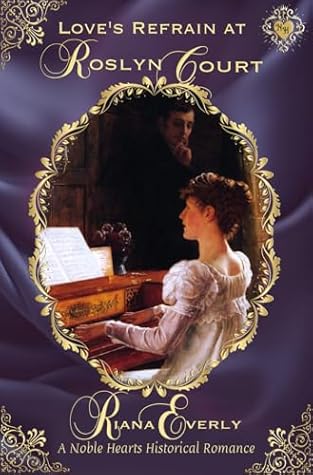
Review: Love’s Refrain at Roslyn Court by Riana Everly (2025)

Posted June 17, 2026 by Mary Kingswood in Review / 0 Comments

I’m not usually a fan of the whole damaged-by-war scenario that afflicts so many Regency heroes these days, but this is a great example of the type, very well-written and with a gentle, slow-burn romance – the very best kind.

Here’s the premise: Sophia Bradley is the abandoned child of a scandal-riddled marriage, happy to be taken in by her uncle and aunt. Her kindly if distant uncle ensured she was raised to the same standard as her cousins, even paying for extra tuition to nurture her talent as a musician. Her aunt is content to see her as nothing but the poor relation, a useful dogsbody to be ordered about and subtly kept in her place. When the family’s younger son is killed in the war against Napoleon, the family is thrown into disarray by the arrival of Major Isaac Hollimore, bringing Henry’s effects with him. Overtaken by illness, he’s invited to stay as long as he wants. He’s happy to do that, especially when he discovers that Sophia’s music helps him forget the horrors of war that still haunt him.

Easy to see where this is going, but Isaac feels himself unfit even to consider marriage, and Sophia’s just the poor relation, isn’t she? And then when it’s revealed that Isaac is going to inherit a viscountcy in time, Sophia’s aunt plots to throw her daughter Louisa in his way, and keep Sophia away from him. And when a charming and handsome neighbour appears, and singles Sophia out for attention, the stage is set for some serious angsting.

This is very much a book based on the two protagonists’ idea that they’re deeply unworthy of being loved. Isaac feels he’s too damaged by his battlefield experiences, which leave him with desperate dreams and dark moods. Sophia feels that her scandalous family history will preclude any respectable man from marrying her, and sees her future as the permanent poor relation, acting as secretary, companion or governess to her relations, or even in a paid position. It takes them the whole book to shake off these feelings of unworthiness, and to be frank, I wanted to bang their heads together sometimes. Even at the end, they have to be chivvied into finding their own happiness by their friends.

I mentioned that I’m not a fan of the damaged hero trope, but despite that, and the amount of soul-searching that Isaac goes through, I still found this a compelling story. I loved that Sophia’s music is the medicine that helps Isaac to heal. I found that totally plausible. Authors sometimes underestimate the power of music to affect us in a very direct, subliminal way. For anyone who is musical, the author names all the pieces that Sophia plays, a nice touch.

The book is beautifully written, and although the author is Canadian, I only spotted one error in the whole book. When she talks about Isaac’s impending elevation to a viscountcy, she uses the expression ‘a seat in Lords’ (meaning the House of Lords in Parliament); Brits would say ‘in the Lords’ or ‘in the Upper House’ or ‘in the Upper Chamber’. It’s like High Street, always a ‘the’ in front (but not for London Road, Bath Road or whatever, unless you say ‘we’re on the Bath road’. But someone would live on London Road or THE High Street. Weird, I know. If not for that missing ‘the’, I’d have believed the author was British, so kudos for that.

A lovely book, unusual for its emphasis on music. A little too angsty for me, which keeps it to four stars, but I found it a compelling read all the same.

Tags:


Review: The Unyielding Heart by Clara Montford (2026)

Posted May 21, 2026 by Mary Kingswood in Review / 0 Comments

This seems to be the debut Regency by this author, and it’s a striking piece of work, with an intensity that few books of this genre can match. There were some oddities, but on the whole it’s a brilliant piece of work.

Here’s the premise: Juliana Lockwood has agreed to marry her cousin, Oliver Fairchild. It’s not a love match on either side, merely a practical solution to her father’s growing debts, and Oliver has his own reasons for his reluctance, but the settlements are agreed, and the engagement is on. At this point, a neighbour, Sebastian Blackwood, returns to the district after five years away, and he and Juliana are immediately drawn to each other, both physically and intellectually.

This sets the scene for the fundamental premise of the book, whether Juliana follows her heart or does her duty by her family, and settles for the pragmatic marriage. This is a dilemma that must have arisen with great regularity in Regency times, and the safe marriage to the known quantity was a common solution to the problem of finding marriage partners for all the children when the family was buried in the countryside with only a limited number of families of equal rank to choose from. The wealthy and aristocratic went to London to find husbands, but country families had few options.

To be honest, I never quite understood why Juliana viewed the marriage in such a negative light. Oliver was a friend for whom she must have felt some affection, if only through the shared experiences of childhood. She knew his character and had nothing to fear from it. Oliver’s secret (which isn’t much of a secret, since it’s revealed very early) didn’t preclude having a happy, or at least contented, marriage, and for Juliana (and all Regency women) there were advantages in marriage that had nothing to do with the chosen husband. Independence, for one thing, and the ability to escape from the constant control of the family. But we see none of this – it’s all about how the marriage would stifle her (or ‘bury her alive’, as the blurb has it).

Sebastian Blackwood enters this situation with all the subtlety of a hand grenade. He starts by having a long, intense conversation with Juliana at their very first meeting, laden with subtext. He deduces her situation right away (and this is a constant refrain, that everybody understands everything; every meaningful look is interpreted in depth by observers, so there are absolutely no secrets). The intensity is another recurring theme, with every dialogue redolent with meaning. Anyone looking for the traditional Regency restraint had better move swiftly on, because there’s none on display here.

While we’re on the subject of Regency expectations, there are a number of minor irritations. Some are the usual thing: dance cards, the modern waltz, passed instead of died, service a la russe, the big wedding (invitations, lace veils, table decorations and all), a dedicated ballroom in a private house (vanishingly rare; a medieval house would use either the great hall or the long gallery, and a modern building would have several smaller rooms that opened into one larger room).

There were some strange breaches of etiquette, like general conversation around the table at a formal dinner, and the new neighbour who calls on the neighbours instead of waiting for them to call on him. Surely everyone who’s read Pride & Prejudice knows that the protocol was for Mr Bennet to call on Mr Bingley, not the other way round? Then there was the howler of shooting pheasant in July, a huge no-no (autumn and winter only).

One aspect that I found really unsettling (although I’m sure it wouldn’t bother most people) is characters being called by their Christian names. Not in dialogue, which was always strictly formal and very correct, but in the narrative. Juliana’s father was called Augustus several times, and her Aunt Charlotte was regularly called just Charlotte. I’m used to the point of view setting the names, so when we’re in Juliana’s point of view, I’d expect it to be Mr Lockwood said… or Aunt Charlotte said… As it was, it was very odd.

One other unsettling aspect was not knowing quite where the story was set. Juliana’s house is described as being very close to open moorland, but there isn’t that much proper moorland in England and most of it is in the northern counties (but we’re told it’s not in the north). I can only assume it’s down in Devon or Cornwall, but there’s no other indication, apart from the moors. Does it matter? No, not at all, but it does feel odd, much the same, I imagine, as an American reader not knowing whether a book is set in Louisiana or Idaho. Even if it’s not plot-related, one likes to know where one is. Every Jane Austin book is set in a specific county.

But these points are relatively trivial, because the strengths of the book far overshadow my minor grumbles. The author’s glorious powers of description, for instance. She has an amazing ability to evoke a setting in wonderfully atmospheric terms, and the weather plays a big role, too, with storms and rain abounding. I suspect the author is a fan of the Kiera Knightly P&P, since the hero spends a number of important scenes dripping wet.

Then there’s the intensity that I mentioned earlier. This gives the whole story a power that most Regencies entirely lack. Let’s face it, the conflict between marrying for duty or love is as old as the genre itself, but here it’s given an unusual resonance. There are some moments (OK, a lot of moments) where the intensity spills over into un-Regency-like openness, and on a number of occasions things are said openly that I would have expected to be expressed privately or at least more subtly. But every author creates her own version of the Regency, and this one has a lot less restraint than the norm.

There’s only one point where the lack of restraint is just too implausible and that’s the climactic dinner party, where things were said and done in the presence of all the neighbourhood worthies and the servants! No, just no. And no, marriage settlements were not signed at the dinner table, or by the bride – that was men’s work, and in private. But I confess, it makes for a very dramatic moment, which is presumably just as the author intended, so I won’t knock off a point for it.

A very unusual and powerfully compelling read, that I just couldn’t put down. I’ll be watching out for more of this author’s work. Five stars.
Tags:


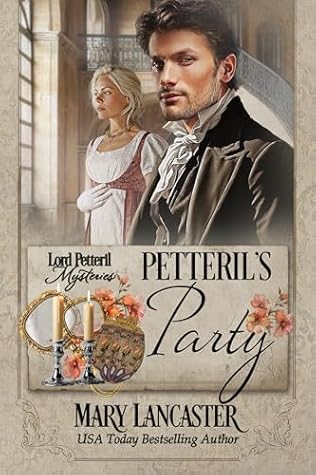
Review: Petteril’s Party by Mary Lancaster (2026)

Posted May 21, 2026 by Mary Kingswood in Review / 2 Comments

This is book 9 in the series, and although the initial freshness has worn off and the disparity between April’s background and Piers’ rank is of less importance now, the author still manages to come up with an entertaining and intriguing mystery.

Here’s the premise: April and Piers have arranged a get-together for all Piers’ old friends from his days as an academic, before he inherited a viscountcy and was forced to give it all up. They’ve rented a house for a couple of weeks, but the owners have taken most of the servants to London with them, there are weird noises in the night and odd things disappear. Then there’s the sole remaining manservant, who’s insolent and lazy. And then there’s the lady who has some history with Piers, so that April is torn by jealousy. And then there’s an attempted murder…

From then on, the plot rumbles on almost under its own steam. The intrepid duo investigate the attack on the footman, while the lesser mysteries are rather easily resolved. For Piers, there’s the question of whether his academic friends could possibly be involved in bopping the footman over the head, and his loyalty to his friends is counterbalanced by April’s clearer vision of these people she’s only just met. For April, there’s the huge gulf between her own background and Piers’ highly educated upper-class friends. And the friends have their own uncertainties and insecurities.

It all comes to a satisfactory conclusion, naturally, although (as usual) I didn’t guess the identity of the villain. One line near the end shocked me, though – apparently only a little over a year has passed since Piers and April first met. Considering just how many murders and other mysteries have been squeezed into that time (including a trip to Portugal), and how much April has been required to change, from street urchin and thief to gracious viscountess, my suspension of disbelief is hanging by a thread. But the series is so entertaining, I’m happy to pretend it’s plausible. Five stars (again).

Tags:


Review: Frances sets the Fashion by Christina Dudley (2026)

Posted May 21, 2026 by Mary Kingswood in Review / 1 Comment

Christina Dudley is such a clever author! This seemingly simple plot (let’s put on a play!) produced a tale of delicious complexity, and every part of it perfectly sensible.
Here’s the premise: Frances Barstow has grown up as a dependant of benevolent Lord Dere. Unlike her older siblings, however, she hasn’t pushed back against the hostility of Lord Dere’s niece-in-law, Mrs Markham Dere. In fact, she has gone out of her way to keep Mrs Dere contented, and now that Frances if of marriageable age, she is set to reap the reward. Mrs Dere and a friend with a daughter of similar age arrange a party, to which three eligible young men will be invited, and Frances will be expected to make a push to secure one of them for herself. And yes, Mrs Dere will do the choosing. Since Frances has no particular wish to marry yet, she’s thrust into a difficult situation – can she avoid being edged into a marriage against her will but still keep her sponsor happy?

The three young men have their own problems. One of them, Mr Midgecomb (or Midge) is in love with the friend’s daughter, Jane Eveleigh, but being of only ordinary appearance, he is always outshone by the extremely beautiful (not to mention charming and witty) Adam Hearne. To boost his own chances, he persuades Adam to pretend to be simple-minded. Adam, a consummate actor, isn’t averse, especially as he has no wish to marry himself. But when the invitation to the house party arrives, he finds he’s committed to his dumb act for several weeks – quite a challenge! But still, with so many people around them, they’ll be able to do some real acting, won’t they, and put on a performance of A Midsummer Night’s Dream?

There’s a lot going on here, with the swirling machinations of the two matchmakers, the waxing and waning friendship of the two young ladies as they compete (seriously or otherwise) for the attentions of the men, and the manoeuvrings of the men themselves. And all of it wrapped up in the preparations for the performance of the play, with readings, rehearsals, costume preparations and the like. Frances is hard-pressed to avoid entanglements without falling out with either her friend or her benefactress. And all the time, Frances and Adam are ever-so-slowly falling in love, even featuring an impulsive but still in character proposal, only held back by his assumed stupidity and the promises they’ve made to other people, intended to be helpful but now thrusting them deeper into deceit.

The whole situation blows up when Adam’s family history turns up to haunt him and everything goes pear-shaped. So many Regencies depend on manufactured tension to throw a spanner in the works, or even worse, the Great Misunderstanding, but the falling out here is real and serious. Offending Mrs Markham Dere, when the Barstows are entirely dependent on the goodwill of Lord Dere for the very roof over their heads is not something to be done lightly, and the whole village is dragged into the dispute.

It takes some time to disentangle all the pretence (and the reasons for it), but everything comes to a rousing conclusion in the end. I do have a small grumble, a personal reaction to Adam’s return and his final proposal. As written, there’s some edgy sparring between Frances and Adam, showing that she has not entirely forgiven his deception. He then sets about a thoroughly convoluted and teasing proposal, completely misleading her on some important points. Now, I can see that perhaps it was intended to demonstrate clever Adam as opposed to his falsely stupid persona, but to my mind it was both cruel to Frances, to keep her in suspense, and also dishonest. In my opinion, what was needed after all the deception was a totally honest (and humble) proposal, with a suitable amount of grovelling. All the clever stuff just made him seem arrogant, to my mind. But that’s a personal view, and perhaps I’m alone in that reaction.

Still, the matter was settled quickly enough once he stopped teasing her, and all ended satisfactorily. An excellent five stars (as usual).

Tags:


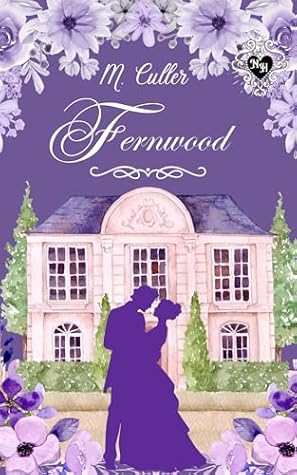
Review: Fernwood by M Culler (2024)

Posted May 8, 2026 by Mary Kingswood in Review / 0 Comments

Not my usual fare, this is a mid-Victorian romance with a complicated false identity that actually worked surprisingly well. No great depth to it, but an enjoyable read.

Here’s the premise: Eliza Southwell is an aspiring actress who’s had no luck in her native Boston finding stage work, so she takes a job as companion and maid to a wealthy widow travelling to England. Surely she’ll find work there? All she has to do is see her new mistress safely to her late husband’s estate – how hard can it be? But when the widow dies unexpectedly while at sea, and the crew mistakenly assume Eliza is the rich widow… what’s a girl to do? And when she sees Fernwood and meets her supposed sister-in-law, she’s not sure she ever wants to leave.

There just one small fly in the ointment – her supposed dead husband isn’t dead at all, and when he turns up alive and well and clearly able to identify his supposed wife as an impostor, the fat is well and truly in the fire.

This is a short book and a romance, so nothing happens that the reader can’t easily predict. The husband agrees to go along with the subterfuge, the two gradually fall in love and a way is found to set everything on a proper legal footing without creating a huge scandal. The villain isn’t really much of a villain, and is easily dealt with, so there isn’t much of an obstacle to the happy ever after.

This kind of premise only works if it’s believable, and in this case, both the wife’s demise and the actress who takes her place, and the husband being mistakenly thought to be dead are completely credible. The other difficult point is when the husband finds out his wife is strangely different from how he remembered her, and this is perhaps less believable, but by this point I was invested in both the principals, so I could go with the flow.

I have some minor grumbles. Firstly, the use of ‘passed’ instead of ‘died’, which was a huge irritant in the early chapters. I told myself repeatedly that Eliza was American, so maybe she would say that, but it still grated. The other major irritant was the use of dual first person narrative, which made it difficult to know whose was the point of view. I know it’s trendy now, but it’s really hard to read, so please, authors, don’t do this. These points were especially irritating as the book was otherwise very well written.

Other than that, I had no quibble with the story. I would have liked it to be a bit longer to give the characters somewhat more nuanced behaviours. As it was, the principals were all too good to be true, but it’s not a big deal. An enjoyable read. Four stars.

Tags: