
 A charming tale that’s fairly predictable, but no worse for that. I’m not sure that the rather arm-wavy attitude to war wounds passes muster in this day and age (this book is close to fifty years old!) but I was grateful to be spared too many of the gory details.
Here’s the premise: Captain Henry (Harry) Thorne is fighting Napoleon when he learns that he’s become the Sixth Earl of Thornbury. There’s just one problem – his final battle leaves him so injured that he loses one leg, which, combined with the vagaries of war, means that it’s some time before he returns to England, and all he wants is to retreat to his most remote estate and hide away from the world. Meanwhile, in London, his relations are hoping he’s dead, but until that’s certain, they can’t claim the estate and their debts are growing. The only answer is to marry their ward, Nell Beldon, to the nearest rich suitor. But she’s a spirited (ie flighty) soul, and she ditches him – her third jilting! Her guardians despatch her to a distant estate until she’s prepared to do their bidding.
Well, there could be any number of remote estates owned by the family, but naturally the two end up at the same one, where Nell finds the family taking care of the house strangely reluctant to welcome them. In fact, they’d be very pleased if they’d just turn round and go back to London, because after all, they wouldn’t want to stay in a haunted house, would they?
Nell would, actually, and when she’s treated to clanking chains and ghostly apparitions at midnight, she’s by turns amused, intrigued and then curious. Who is this mysterious ghost? It’s not a spoiler to reveal the answer – it’s in the blurb, after all. The ghost is none other than Harry Thorne, so keen to be left in peace that he’s prepared to drive his unwanted visitors away. Nell tumbles to it pretty quickly, and sets about convincing the reluctant earl to take up his rightful place in society. He isn’t convinced, but all those intimate midnight conversations, where the normal bounds of propriety seem not to apply, have had their usual effect, and the two are well on the way to falling in love.
But there’s a wrinkle. Before he went off to war, Harry was sort of (but not quite) betrothed to a very respectable girl, and Nell knows that she’s still not married or even betrothed. She’s waiting for her hero to return, and Harry really needs to do the honourable thing and see her again, missing leg or no missing leg. And so the second part of the book leaves behind the charming Cornish setting and becomes a more conventional Regency in London, where both Nell and Harry wrestle with their consciences and their feelings.
The resolutions to these knotty problems are totally in keeping with their characters, and (in Harry’s case) delightfully original. A lovely romance, an unusual premise, beautifully written (albeit with a few Americanisms) and a thoroughly enjoyable read. A good four stars.
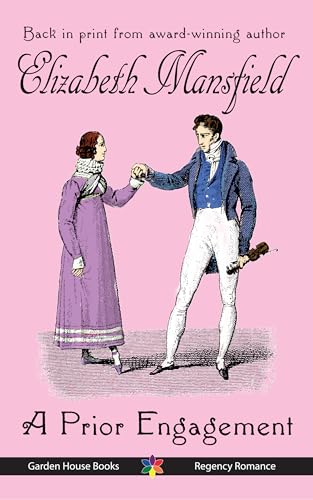 A terrific read, the first book for ages that’s had me so spellbound that everything else got neglected so that I could carry on reading. One of those tales with such an arresting premise that you just have to know how it all works out.