 A charming tale, with nothing terribly original about it but none the worse for that. Sometimes a well-written traditional read is exactly what’s wanted.
Here’s the premise: Selena Lockhart’s family is the one who’s suffered the fall from grace of the title, her father having gambled away his fortune and then drunk himself into an early grave. His widow and daughters are reduced to poverty, Selena’s betrothed breaks off their engagement and Selena is obliged to accept a position as companion to a distant relation, Lady Harrowden.
The stage coach breaks down in the snow and she seeks shelter from a nearby hunting box. The tale is channelling Heyer’s Arabella at this point, and to similar effect, for the occupant is Sir Lucius Clavering, a baronet who has retreated from a surfeit of demanding relations and the attentions of matchmaking mamas. He naturally assumes she’s attempting to force a proposal by scandal, not least because he already has one young lady under his roof trying it on. He quickly realises that Selena is genuinely a damsel in distress, and is able to use her to protect himself from the avaricious Miss Woodsley. He takes Selena to her destination.
Here she finds that the widowed Lady Harrowden is precisely the sort of irrational, authoritarian, demanding elderly woman so beloved of Regency romances, and so useful for plot contrivances. In addition, the new Lord Harrowden is another staple of the genre, the rakish but handsome young man who immediately identifies Selena as the sort of destitute but beautiful female who can be seduced into becoming his mistress. He takes her for a long walk in the snow, where she is rescued (again) by Lucius (why on earth did she go with him? I don’t for one minute believe that she couldn’t say no). And the ambitious hussy, Miss Rebecca Woodsley, turns out by a tremendous coincidence to be Lady Harrowden’s ward who has run away from school, and is now added to the long list of Selena’s responsibilities. I wasn’t at all clear how Rebecca came to be Lady H’s ward, or what Lady H meant by not having the blood to marry well, despite a tidy fortune (I wondered if she were illegitimate? Descended from trade? Not clear, although I read this so quickly I may have missed it).
Selena’s arrival prompts the negligent Sir Lucius to fulfil a promise to the late Lord Harrowden to look after his widow, which Lucius now attempts to rectify. And if that throws him into the path of the intriguing Selena, he has no objection to that. Since she likes him too, it seems that the romance is set fair for a swift conclusion. There are no obstacles, after all – or are there?
This is where things go awry, because Selena’s past rises up to disturb the present. Lucius’s sister Maria tries to steer him away from the ladylike Selena (why?) and towards the pretty but feckless heiress Rebecca Woodsley (again, why?) by deliberately inviting Selena’s former betrothed to a ball to make a scene. Which he does, in spectacular fashion, so that Selena is ostracised all over again.
And here is where Lucius fails the hero test, because instead of rescuing her from this humiliation, he stands aside. The stated reason is that he doesn’t want to make what amounts to a declaration by springing to Selena’s defence. But he could spring to his sister’s defence – the man is making a scene at Maria’s ball, and Lucius would be quite within a brother’s rights to step in. So I disagreed very much with his logic here.
And even when he’s made up his mind what he wants to do, he leaves Selena dangling instead of being open with her, and she, silly girl, decides she’s not worthy of him. So it all gets a bit muddled and although it comes right in the end, I wasn’t mad keen on Lucius’s solution to the problem, which is all a bit domineering.
The writing is excellent, but I had some minor quibbles, mostly trivial Americanisms that wouldn’t worry most readers but repeatedly tripped me up – things like ‘go do something’ instead of ‘go and do’, ‘look out the window’ instead of ‘look out of the window’ and one solitary gotten. I told you they were trivial. On the special licence front, I’m not at all sure that it would work that way, but nobody seems to get that right (even Heyer got it wrong) so let it pass. I would have liked more interaction between the principals to show the deepening of their relationship, but there’s a glorious interchange near the end when he’s trying to persuade her to marry him which I adored. I’d have liked a lot more like that to show the connection between them.
This is a solid traditional read, and if I wasn’t certain about Lucius’s motivations, and Lady H’s whims were a little too convenient for the plot, and Selena wasn’t always very sensible, I still thoroughly enjoyed it and tore through it in almost a single session. It’s a very good four stars for me.
 This book ran on swimmingly until about the 98% mark and then the hero committed such an offence, I’m not sure I can forgive him. There will be spoilers ahead, so don’t read on if you don’t want to know.
 I’m loving this new series of Martha Keyes’. I recommend starting with the free (at the time of writing) prequel, Unrequited, and paying attention to the whole family – they really are an interesting lot. This one focuses on the sister and brother of the previous hero and heroine, one an unreformed rake and the other a girl who’s been buried in the country for years finally making a belated appearance in society. It’s a fascinating pairing.
 This book was a joy to read. I had a smile on my face from the opening moment, when the irrepressible Lily talks about her sister’s betrothed as ‘the Dreadful Mr Gregory’ to the final scene of the hero and heroine at last in each other’s arms.
 Catherine J Bowness is a new author to me, but I’ll certainly be reading more of her work. This was delightful. It’s very traditional, so anyone hankering for something in the style of Heyer, complete with presentations and vouchers for Almack’s and rides in Hyde Park, should find this hits the spot. There are shades of Arabella, and also Venetia, although it’s also very much itself, not a pale imitation.
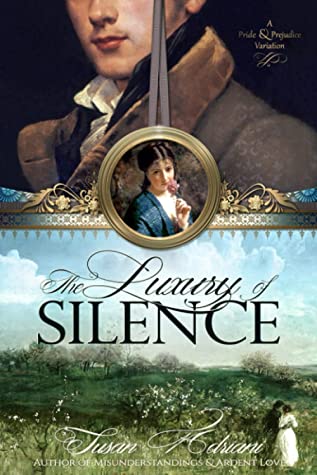 I haven’t read many Pride and Prejudice variations, but they were uniformly awesome. This didn’t quite match those stellar heights, but the bar was set quite high and this is a pleasant enough read, although it doesn’t add any great insights into the characters.
 This is an oddity. A stern and grumpy duke, a shy country girl all at sea in London, and possibly the oddest romance I’ve read in a long time. I like a quirky story, but sometimes this felt a little too out there even for me. And yet, there are some wonderful moments that will stay with me for a long time.
 I came to this book straight after the wonderful prequel to the series, Unrequited, which I loved. This doesn’t quite set me on fire the same way, but it has an absolutely wonderful hero, and some glorious battles of wits between the two main characters, as well as some entertaining side characters, and of course Keyes’ trademark lovely writing.
 I’d almost forgotten just how good Martha Keyes is. I’ve been a fan of hers since first stumbling across Wyndcross three years ago, and read all her early work avidly. She took an authorly excursion to Scotland, which didn’t interest me, but now she’s back in the English Regency and she’s only improved in the interim. This is the prequel to her new series, and it’s a wonderful, nuanced, layered work. I loved it.
 This is one of those books that absolutely shouldn’t have worked for me. It was too tropey for words, and channelled some of my least favourite Georgette Heyers. And yet I enjoyed it a whole heap. So there.