
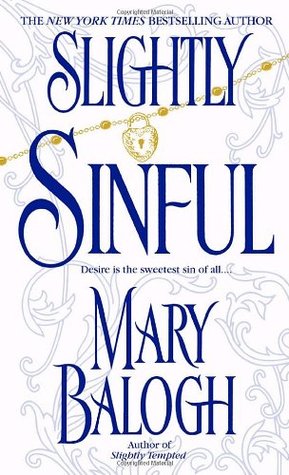
 After a saggy fourth book in the series, this is a return to top form, even though it features my least favourite trope – the lost memory. Sigh. But I’m always prepared to give a book its starting point, and the author really makes this work, so there we are.
Here’s the premise: Lord Alleyne Bedwyn, younger brother of the Duke of Bewcastle, is determined to do something useful with his life, so he’s joined the diplomatic corps. As a result, he’s in Brussels on the eve of the Battle of Waterloo, and during the battle, he’s sent to take a message to Wellington. On his way back from the battle, a stray bullet hits his leg and he ends up falling from his horse and hitting his head. There he might have died but he’s found by Rachel York and taken back to a place of safety to recuperate. Which happens to be a brothel.
Knowing nothing about himself, he’s forced to stay with the ladies of the brothel, together with Rachel and an injured sergeant. The ladies and Rachel have been robbed by a fake clergyman, so, having nothing better to do, Alleyne joins in a scheme to claim Rachel’s fortune, a collection of jewellery held by her baron uncle, which will be hers at the age of 25 – or when she marries. So Alleyne and Rachel pretend to be married, and the others become respectable women for the purposes of the scheme.
This part is a lot of fun, the brothel women gradually taking over the baron’s life, while Alleyne and Rachel gradually fall in love. There’s some sex, as usual, and Balogh uses the very modern terms ‘sex’ and ‘making love’, but that’s not a big deal, and at least there’s some attention paid to the possibility of consequences to unprotected sex. When the fake clergyman is finally found, we get some gloriously farcical scenes in Bath, as everyone sets about him in their own inimitable ways.
But inevitably Alleyne’s identity won’t remain a secret for too long, and the rest of the book is about his reunion with his family. There’s one issue I had with the memory loss part of the plot. When Balogh is writing from Alleyne’s point of view, she actually calls him Alleyne. I confess, this grated on me. Since he doesn’t know his own name, it would make more sense to just use ‘he’ or his fake name of ‘Jonathon’. Rachel’s point of view does indeed call him Jonathon, so why not do the same for his point of view? But it’s a tricky point, and clearly Balogh made her choice for her own good reasons.
Despite the memory loss trope, this book worked much better than the previous one. The back story made more sense, there was some real humour in it, but also real emotion when Alleyne returns to his family after being given up for dead. An excellent five stars.