 Hooray for a heroine who is smart, resourceful and knows her own mind right from the start! So many of Heyer’s heroines somehow don’t recognise their own feelings until the hero sweeps them into his manly arms and kisses them thoroughly, but Venetia is not of that type. She sees her soul-mate in Damerel almost at once, and isn’t the slightest bit deterred by his rakish past. In fact, at the end of the book, her urgency in wanting to get back to him is as much driven by fear that he will take another mistress as anything else.
Venetia is twenty five, and has lived secluded all her adult life, firstly by the vagaries of her eccentric father, and later by the need to deputise for her absent brother, the heir to the estate, and her highly intellectual younger brother, who has a leg damaged by childhood illness. She is pursued by two dogged swains. One is a suitable and worthy but deadly dull man, who never respects Venetia enough to believe her when she says she doesn’t want to marry him. In fact, he never believes anything she says, because he’s a man and he knows better. The other is very young, suffering from over-romantic calf-love.
Into this state of stasis drops the owner of the neighbouring, much neglected, estate, Lord Damerel, a renowned rake and ne’er-do-well. As is very commonplace in these stories, his every action within the confines of the book are perfectly respectable (with one exception – his first meeting with Venetia). But from then onwards, he lives a blameless, not to say generous and open-hearted, life, setting his estate in order, taking Venetia’s hard-to-manage brother in hand and behaving with perfect propriety towards Venetia herself. It’s claimed that his objective is to seduce her, but frankly he never steps outside the bounds of propriety once, so it’s hard to believe.
The romance in this book is one of the most natural and charming that Heyer ever wrote. These two are perfect friends, getting along so well that you wonder quite how they can ever be kept apart. But kept apart they are, and for that stupid old chestnut of a reason, ‘the heroine’s own good’. Fortunately, Venetia discovers the truth and, being a resourceful lady, sets about securing her own happiness with great determination. My eyebrows rose at her journey all alone on the mail coach, and there’s just a touch of deus ex machina in the way she resolves her difficulty, but whatever.
Venetia’s family, even the always absent heir, Conway, is steeped in selfishness. The father withdrew into seclusion, trapping Venetia with him. The older brother is both selfish and indolent, one of those people who just never knuckles down to doing anything that might make him the slightest bit uncomfortable. The younger brother is immersed in his books, to the point of barely noticing the existence of his sister. And the mother – well, let’s just say she was pretty selfish, too. So it comes as no surprise that when it come to the crunch, Venetia decides to be selfish, too, and grab her happiness by the scruff of its neck, regardless of her family. And of course Damerel has always been selfish, too. I do wonder whether he will reform or not. The two have this delightful discussion at the end of the book, and I’m not at all sure whether this is serious, or only partly serious or all in fun:
‘You’d know about my orgies!’ objected Damerel.
‘Yes, but I shouldn’t care about them, once in a while. After all, it would be quite unreasonable to wish you to change all your habits, and I can always retire to bed, can’t I?’
‘Oh, won’t you preside over them?’ he said, much disappointed.
‘Yes, love, if you wish me to,’ she replied, smiling at him. ‘Should I enjoy them?’
He stretched out his hand, and when she laid her own in it, held it very tightly. ‘You shall have a splendid orgy, my dear delight, and you will enjoy it very much indeed!’
The final scenes are lovely, and there’s the usual array of wonderful minor characters to enjoy. This is more wordy and introspective than many Heyers, and I didn’t find either of the two suitors worthy of the amount of words expended on them, but never mind. A terrific heroine, a charming and un-rake-like hero and a wonderful romance – five stars.
 One of the things that Mary Balogh does brilliantly is to take a wildly unusual situation, toss her characters into it and leave them to sink or swim accordingly. In this case, Rosamund and Justin meet entirely by chance on the road in the middle of a snowstorm. She has just quarrelled with her brother and sets out to walk – somewhere, anywhere. He is trying to recover something from a planned week of pre-wedding debauchery where all the other participants have cried off. They escape the snow in a hunting lodge, and, since she’s a widow curious about sex with a younger man, and he was expecting a week of sex anyway, they retire to the bedroom pretty quickly. And then, a month later, they meet up at a house party where he is expected to propose to her niece. How very awkward.
 This book made me uncomfortable. One of the tropes I dislike intensely in any kind of book, although it’s particularly prevalent in Regencies, is the misunderstanding between hero and heroine. If the entire plot could be resolved if they just sat down and discussed it over a cup of tea, then it’s usually an epic fail for me. This book has two qualities that make it compelling despite this, however. One is that it’s beautifully written, every word pulling its weight. The other is that the mix-ups are actually believable. And the final clincher is that, given the title, this is exactly what the story is about, so it’s a bit unfair to quibble.
 1972 version: RADA has a lot to answer for. They’re the ones who produced all those cut-glass accents so beloved of the BBC and its ‘received pronounciation’, who taught actors and actresses how to enunciate on stage to catch the audience in the upper balcony. Which is lovely for a stage production, but doesn’t work at all in a TV production. Doran Godwin’s Emma grated on my ears every time she opened her mouth. She looked the part, certainly, but her voice and the lack of expression sometimes in her face all came directly from live theatre.
 2009 version: Where to begin with this? It’s a real curate’s egg of a production, some dire stuff all muddled up with flashes of brilliance. Let’s start with the brilliance.
 Oh boy (fans self). This was a sizzler and no mistake. And yet, pretty clean. There’s one actual sex scene, although very tastefully done and completely non-graphic, but the rest of it is all kisses and gentle touches. And yet… so hot.
 I loved the two previous books I read by Diane Farr, but this one is a bit of a mish-mash. There are some delightful moments mixed in with some ho-hum parts that just don’t work for me.
 This is a curious one. Hugo Marshall is known as the Wolf of Clermont, as the man who does all the dirty work for the rather unpleasant Duke of Clermont. When governess Serena Barton turns up to demand compensation from the duke, and is prepared to sit on the bench outside his house until he gives in, the duke turns to Hugo to make the problem go away. And that’s exactly what he’s prepared to do, by fair means or foul. When Serena refuses an offer of money, Hugo turns to less pleasant means of persuasion.
 It’s always a good sign when a book keeps me up until 2am, and so it is with this captivating tale, which could almost be an undiscovered Georgette Heyer. There’s nothing terribly unexpected about the story, but it’s the characters who make it. The scholarly and unworldly Duke of Winton is adorable, and his efforts to move through the social whirl of the season and find himself a wife are gloriously funny. He approaches it, naturally, as a scientific problem to be solved, but misunderstandings abound, as when his friend suggests sending a book instead of flowers to a young lady after a ball, and the duke sends her ‘Principia Mathematica’, but only the English translation, in case her Latin isn’t up to the original! The friend, Justin Amesbury, is the exact opposite, socially astute, gently guiding the duke through the shoals of ambitious mamas and insipid debutantes, a thoroughly nice man.
 I love the idea of this: identical twin sisters, but with very different personalities, are making their come-out, but there’s only enough money for one of them to do the season in London. The other is to stay in a small country village, but they’ll meet up once a week… and naturally a certain amount of swapping places goes on. Well, the story practically writes itself, doesn’t it?
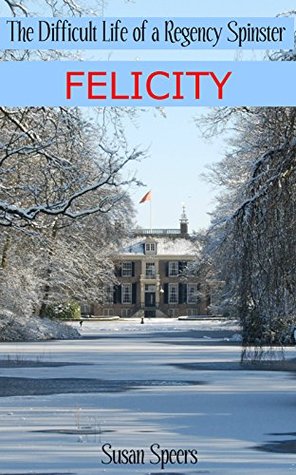 Finally! After five books in the series where the author’s talent almost shone through but was drowned out by misfiring plots, a scattergun approach to punctuation and (in one case) sheer dullness, here she gets everything right. Fascinating characters, an engrossing story, a villain unmasked and a heart-warming romance – this one works on all fronts, and the editing is excellent, too.