 There’s a lot to like about this, and also a lot of big irritations. There were moments when I couldn’t see how I would give it more than three stars, and there were brief moments of five star brilliance, so I’ve settled on four stars as a compromise. But it’s lumpy, very lumpy.
The premise is that dissolute Lord Ragsdale has his troublesome American cousins foisted on him, and if this were a Georgette Heyer book, the cousins would be up to all sorts of shenanigans, and world-weary and permanently drunk Lord Ragsdale would be cured of his ennui by sorting out their messes. But this is a very different story. The cousins are shunted offstage and the focal character is their indentured servant, Emma. She it is who forces the marquess to sign a contract: she will reform him from head to toe, and when he is respectably married, he will release he from her indenture. So far, so ludicrously implausible, but whatever.
For those who like their historical romance to have a little actual history (yes, radical, I know), this is your book. Emma is a victim of the Irish troubles of the turn of the century (eighteenth to nineteenth century, that is) who comes from a wealthy family which was captured, tortured, killed and otherwise split apart by the English, whom she hates with a passion. Lord Ragsdale lost an eye and his father in the same battle against Irish rebels, and he hates them with a passion. So of course these two are going to learn tolerance and understanding, and fall in love with each other. Of course.
So far so interesting, and I have no quarrel with the historical aspects. I liked the depth of characterisation which brought these two to life, and I loved their banter, which often made me laugh out loud. The other characters were mere ciphers, plot devices to throw our hero and heroine together, but that’s fine.
So what was so annoying? Firstly, the writing style. There’s some very irritating naming, which uses Lord Ragsdale, John Staples and Cousin John interchangeably, often in the same paragraph. There’s the fact that we’re shown the thoughts of both main characters, which (arguably) gives them greater depth but also is a lazy way of telling us what they’re feeling. Some reviewers really liked this aspect, but I didn’t. I found it jarring, and I would have preferred to be shown their feelings sometimes, for variety.
Another complaint is that Lord Ragsdale must be the easiest person ever to reform. Emma has the booze locked away and hey presto, he’s sober. He never slips, and even when he goes out for the evening and could drink as much as he wants, he comes home sober. All of which is pretty unbelievable. Then there’s the visit to his long-neglected estates in Norfolk, where we find a bunch of rosy-cheeked and friendly peasants, his lordship follows Emma’s instructions to the letter and hey presto, everyone is happy and nothing goes wrong. In fact, this is the recurring theme of the book, that nothing goes wrong, as Lord Ragsdale continues on his merrily reformed way.
And then there’s the romance itself. Oh dear oh dear. For two supposedly intelligent people, they are incredibly dense not to realise that they’re falling in love. When the peasants in Norfolk assume they’re married, that should have made them stop and think, but when they’re kissing and cuddling, with her sitting on his knee, and he then sets off to propose to some silly chit of a girl he doesn’t even like — words fail me.
And the ending… well, I suppose one could say it was a suitably sweeping romantic conclusion to the story, but I kept thinking — what about his mother and his abandoned fiancee and his rosy-cheeked peasants and all his obligations? Shouldn’t he feel some compunction about dropping everything and effectively running away? But somehow, every time the irritation grew to monstrous proportions, there would be an outbreak of Emma’s tart remarks and his lordship’s dry wit and all would be well. And sometimes, cheesy though parts of it were, it brought me to tears. So there’s that. Four stars.
 This was a very enjoyable read, marred only by some over-the-top melodrama. Isolde has grown up with her soldier father, following the drum on the continent, learning to shoot, ride and wield a sword like a man and not so much about ladylike behaviour. When her father dies, his will sends her to her father’s old friend for protection, rather than her mother’s relations. But the old friend has died, and his son now finds himself in charge of the girl.
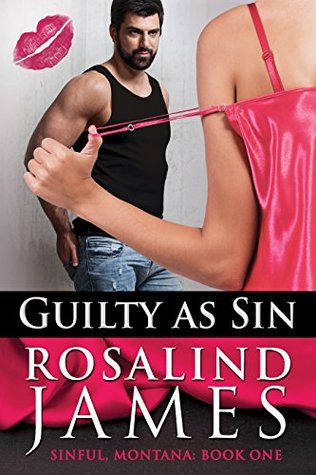 My last book of the year, bringing my total to 60, and it was a good one. I’ve read a couple of other books by Rosalind James which were straightforward contemporary romances, but this was more of a thriller romance, and it had a bit more bite than the others. The premise is that identical twins… yes, yes, I know, straight from the bargain rack of Cliches R Us, but stay with me. Identical twins Lily and Paige Hollander decide to swap places for a while. Lily runs a small-holding and a sexy lingerie shop in rural Montana, and is being pressured to sell her land to make way for a ski resort. Paige is a cop from San Francisco who was shot in a messy incident which saw her partner and the victim of a domestic assault both shot dead. Cue suspension and enquiries and the usual palaver. Both sisters want an escape from their routine lives, so Lily disappears for a restful holiday and Paige takes over the goats, chickens and bras while she heals, both mentally and physically.
 This is the third Mary Balogh I’ve read, and it has exactly the qualities I enjoyed in the others – two fascinating characters thrown together in an intriguing way and having to sink or swim. Naturally, there’s a lot of sinking before our hero and heroine learn to swim together, but it all feels horribly realistic and totally understandable.
 A wonderful read, which starts with a most unusual premise: a girl who has been the downtrodden and unregarded homebody running her widowed father’s country house discovers that she has inherited her mother’s fatal illness and only has months to live. Determined to experience everything she can before she dies, she takes herself to London to stay with her disreputable aunt, where she conducts herself outrageously and becomes notorious.
 This is such a lovely idea! Who wouldn’t want to be picked up after a difficult year and offered the chance to go back to the Regency era for a couple of weeks? With money, servants, accommodation – everything provided. Even a fairy godmother. Who could fail to be healed and comforted by the gentle manners of two hundred years ago? But for Catherine, it doesn’t quite work out as expected.
 Well, this is a riot and no mistake. A modern woman obsessed with Pride and Prejudice finds a portal to the book world in her bathroom when Elizabeth Bennet materialises there. While Elizabeth stays in modern Hammersmith, Amanda Price goes to Longbourn and tries to steer the characters to their true destinies, and fails in spectacular fashion. Jane marries Mr Collins, Charlotte Lucas goes off to be a missionary in Africa, Lydia runs away with Mr Bingley, Mr Bennet duels him, Wickham is a Puck-like mischievous spirit who’s not wicked at all, and Darcy falls in love with Amanda herself.
 A bit of a weepy, this one, but a splendid attempt to examine why it is that some of history’s finest love stories were written by a woman who never married. The cast list is stellar, and every single one of them pulls their weight, not a dud amongst them.
 Mansfield Park is the book I know least about, and the one I’ve seen least performed, so I’m not even terribly clear about the plot details, never mind nuances of dialogue use and so on. This is a 6-part series, and after the first episode I really thought I wasn’t going to enjoy it much at all. But it grew on me, and by about part 4 I was really into it. With so much time, the story really was able to take its time and expand enough for me to understand the story and the characters better.
 DNF. I bought this with birthday money as a treat for myself, because it was one of the top three bestselling Regency romances on Amazon (US site) that day. Now, bestselling just means ‘most popular’, with no guarantee that it will be my cup of tea at all, and anyone who’s read my previous reviews will know that I’m kind of picky about my Regencies. I’ll let slide a certain sloppiness on dates and behaviour, as long as it’s not too outrageous, and I don’t mind a bit of modern language, if the book’s not littered with ‘okays’ and such like, and I’ll even accept that England was entirely populated by dukes, but heaven forfend if one of those dukes is addressed as ‘my lord’. Correct forms of address are really easy to look up. I don’t expect everyone to grasp the nuances of heirs apparent and heirs presumptive, or to know precisely when a widow is a dowager, but please at least know the difference between Lord John and Lord Fortescue (no, they’re not interchangeable).