 These older series are interesting little pieces of history in their own right, and the differences between versions can be illuminating. This version is nearly forty years old, and it shows in some aspects – the sets and costumes, for instance, are far more stagey than modern TV, but the actors, brought up in the grand British traditions of the Royal Shakespeare Company and the BBC, know how to enunciate properly so that the viewer doesn’t need subtitles to understand what’s going on.
Of the actors, the only one I recognised was Tracey Childs (Marianne), who was also in another 80’s drama, Howard’s Way. I thought she made an excellent Marianne, capturing nicely her over-exuberant and emotional personality. She was particularly effective in the distraught London scenes. Irene Richards, as Elinor, was less effective, I thought. She captured effectively neither the practical, down-to-earth side of her character, nor the deep-seated emotions bubbling beneath the surface. I also found her movements to be rather stilted, but perhaps that was an attempt to convey her repressed nature.
Of the minor characters, Mrs Jennings was given a much bigger and more sympathetic role here, turning her from a comedy figure teasing the girls about their lovers to a genuinely maternal person. I liked her the better for it, but it didn’t feel true to the book. The other characters were competent without standing out particularly. Lady Middleton had more of a role in this version, being far more lively than in the book (some versions cut her out altogether). Margaret was the one who got the chop here, but I don’t think the story was any the worse for it.
The one seminal scene by which I judge any adaptation of this book is the occasion when Elinor is called upon to tell Edward that Colonel Brandon has given him a living, so enabling him to marry Lucy Steele. The pathos in the scene, and the subtext which both the reader/viewer and the characters themselves are equally aware of, that Elinor and Edward are very much in love and Edward is only marrying to honourably uphold a longstanding and bitterly regretted engagement, makes it one of the most profoundly moving scenes ever written. It needs superb acting skills but no other embellishment. The Emma Thompson version captured this perfectly, while the 2008 version resorted to overacting and oozing emotionalism. This version is pretty good, too, and stuck to the original words for maximum effect.
The settings lost a certain wildness. Barton Cottage was chocolate box pretty, and nowhere near the sea, and Marianne’s propensity to walk in the rain was lost. I thought an opportunity was lost to portray the sisters’ characters through their clothes, but they seemed to wear very similar garments. Elinor’s in particular I felt should have been plainer, less decorated, to demonstrate her practical nature, and the frill of curled hair round her face was entirely wrong. None of the dresses looked quite right, to me. Maybe they economised by not using authentic materials, so that although they superficially looked all right, they didn’t sit or drape properly.
One aspect that bothered me a great deal was a certain degree of impropriety in the sisters. The number of times one or other of them was left alone in a room with a man was shocking! Elinor was constantly showing people out (that’s what the servants are for, dear), and when Colonel Brandon was brought into Marianne’s bedroom and then left alone with her – I clutched my pearls, I can tell you. But maybe all that was in the book, who knows.
A competent adaptation, I thought, and enjoyable to watch but not my favourite.
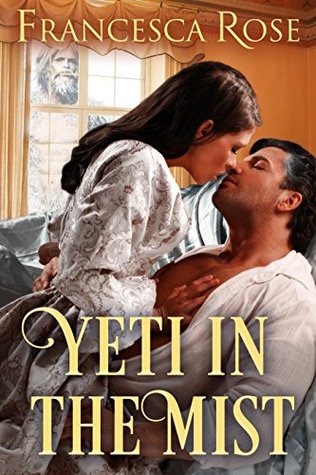 OK. A weird one. This showed up as a sponsored ad underneath one of my own books, and I was intrigued enough to try it. It’s set in the Victorian era, and involves a young wife, her injured husband and a yeti. Um, yes. This is a world where yeti are a part of society, albeit on the fringes of it. So we’re talking paranormal romance, I guess?
 This was published the same year as April Lady, and is so much the better of the two that it’s untrue. The hero is a seemingly perfect gentleman, not a cynical, world-weary older man, and his only flaw is a tendency to arrogance. But then he is a duke, so perhaps that’s unavoidable. The heroine is a bright, independent-minded young lady, quite young (as Heyer’s heroines tend to be) but not at all the silly ingenue.
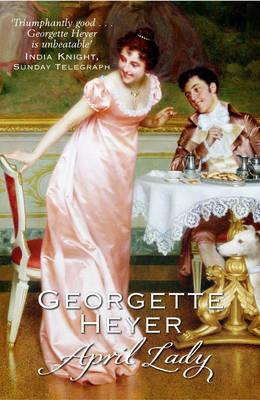 This is one of Heyer’s books that I remember vividly from my original read many years ago, and not in a good way. I’ve not been looking forward to reaching this point in my reread. It has so many of the motifs I really dislike: the worldly older hero, the silly, very young heroine, the misunderstandings, the main romance pushed aside by the subplots… Not to mention there’s also a second silly, very young female, plus (another Heyer favourite) a rather wild young man.
 Maybe it’s my horrible cold that’s turned my brain to mush, but this book made no sense to me on any level. I liked the premise – a lady of 32 sees herself descending into unlamented spinsterhood and determines to have one night of passion before she relinquishes all hope of love. As seducer, she chooses her childhood friend, Quincey, the Earl of Edenburgh. And this part is fine, although as so often happens, the innocent virgin turns out to have a previously unsuspected capacity for multiple orgasms, but whatever. The only constraint she lays on her friend (apart from secrecy, obviously!) is that he mustn’t get all sentimental and offer to marry her, because she’s not a suitable wife for an earl.
 I’m not going to give this a rating because I haven’t read the whole book. Frankly, the writing style and premise aren’t appealing enough to me. However, when I was reading reviews of the book, I came across a reference to a character who ‘used to be an Earl’. Instantly, I was intrigued. How, by all that’s wonderful, could anyone be an Earl and then lose the title? Some arcane legal challenge? The unearthing of another heir? The revelation of illegitimacy? Several possibilities, but all pretty rare. So, when I found out that the book is available in KU and I could download as part of my subscription, I decided to find out.
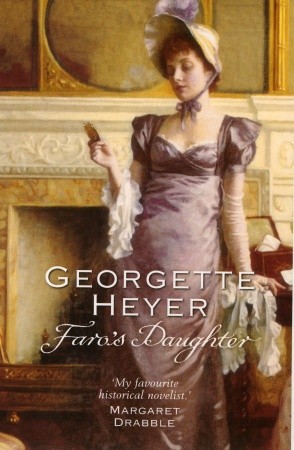 I missed this one in my chronological reread of Heyer’s Regency romances because it’s actually set in the 18th century, but apart from the occasional mention of brocade coats and lace frills and sac dresses, it’s indistinguishable from the other romances. The hero is the usual world-weary older man, arrogant to the point of rudeness. The heroine is the spirited and independent sort, not quite the Grand Sophy or Serena from Bath Tangle, but along those lines. There are not one but two doe-eyed ingenues, and one callow buck, so we are on familiar ground here.
 This book was a delight from start to finish. Every character was a comedic masterpiece, from Lord Mulholland, deeply suspicious of anyone emanating from a different county, to Smuckers the butler, seeing himself as a knight of old, rallying the troops below stairs to ever greater feats.
 I bought this way back at the beginning of the year when I was researching the West Indies in the Regency era, but the book that needed the research was published in March, and here I am only just getting round to doing my research. Ah well.
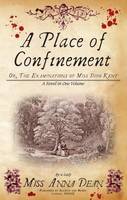 This series is a collection of little gems: beautifully written tales that never, ever impose modern sensibilities on the characters, and manage to combine Jane Austen’s wit and observational skills with the amateur sleuthing of Agatha Christie’s Miss Marple. The romance is subtle and clever, with the obstacles being intellectual and philosophical ones, rather than the usual tired old tropes. This is the fourth book of the series, and although the romance finally reaches a satisfactory conclusion here, I really, really hope there will be more to come about these delightful characters.